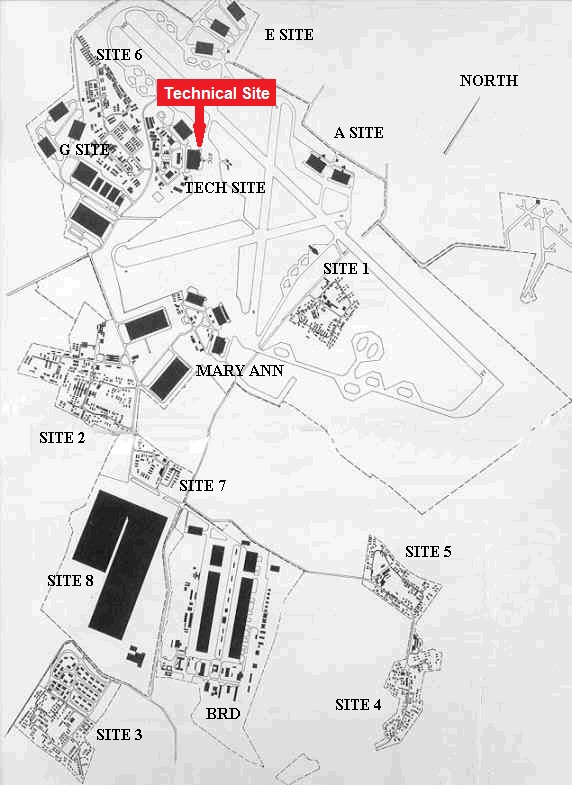


Where not built until the 1950's & consisted of a small hotel which had many rooms, but were far too small. So an off base ex royal naval camp was taken over at scotia north to supplement this role, which was located on Hesketh Meadow Lane, off the East Lancs Road in Lowton Near Leigh Lancs
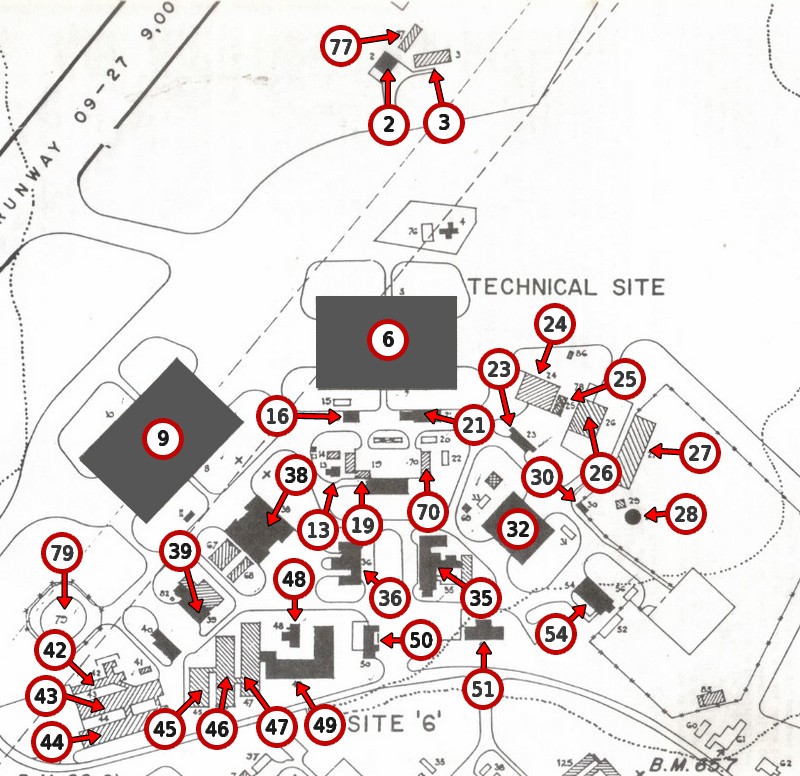
1,2,3,4 on the photo below are extra items just describing that these are separate from tech site
is site 6, and number 2 is the G-site with their L- type hangars Number 3 is the warehouse workshops, and number 4 is the Bellman hangars
is in the foreground with its correct building numbers
description above
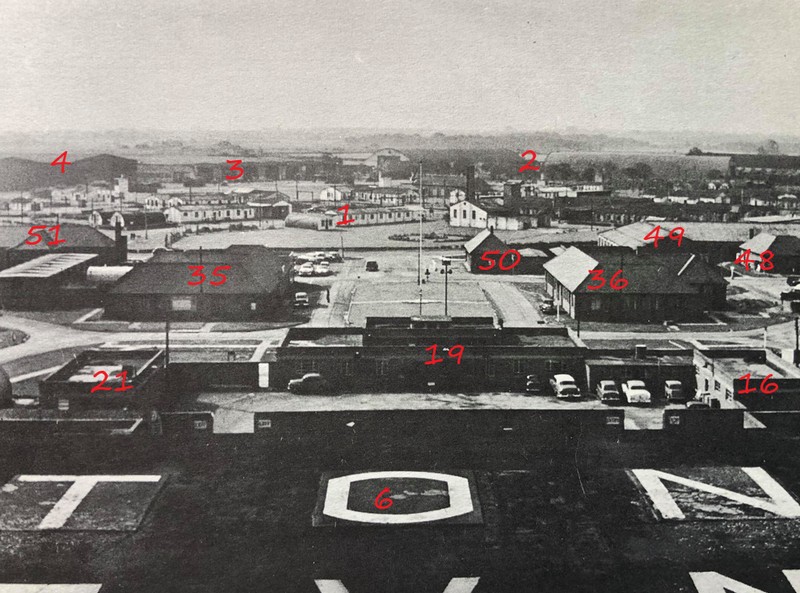
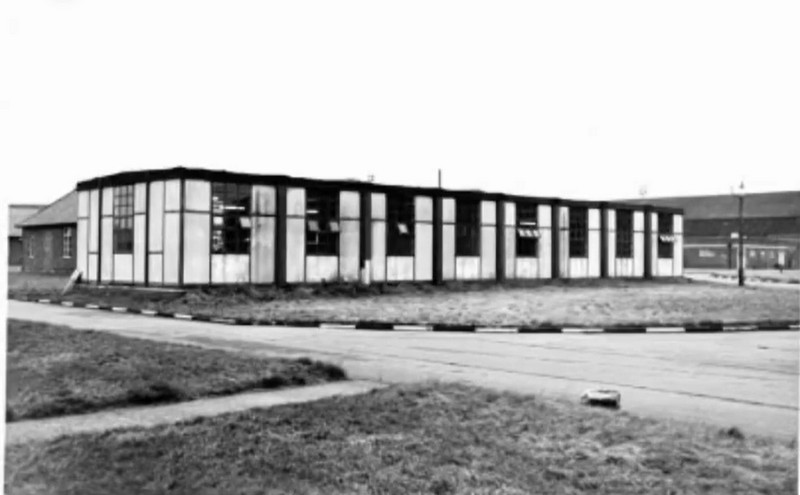
Technical Site The white Uni- Seco-type building behind the back of the Station Headquarters is a later addition to Building 35
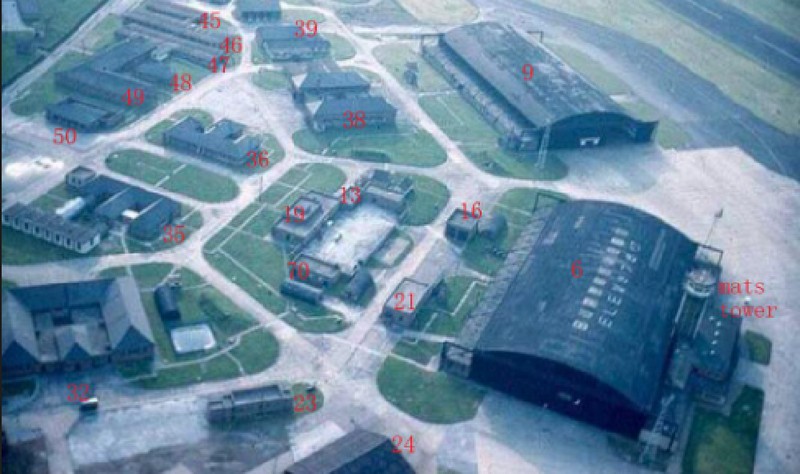
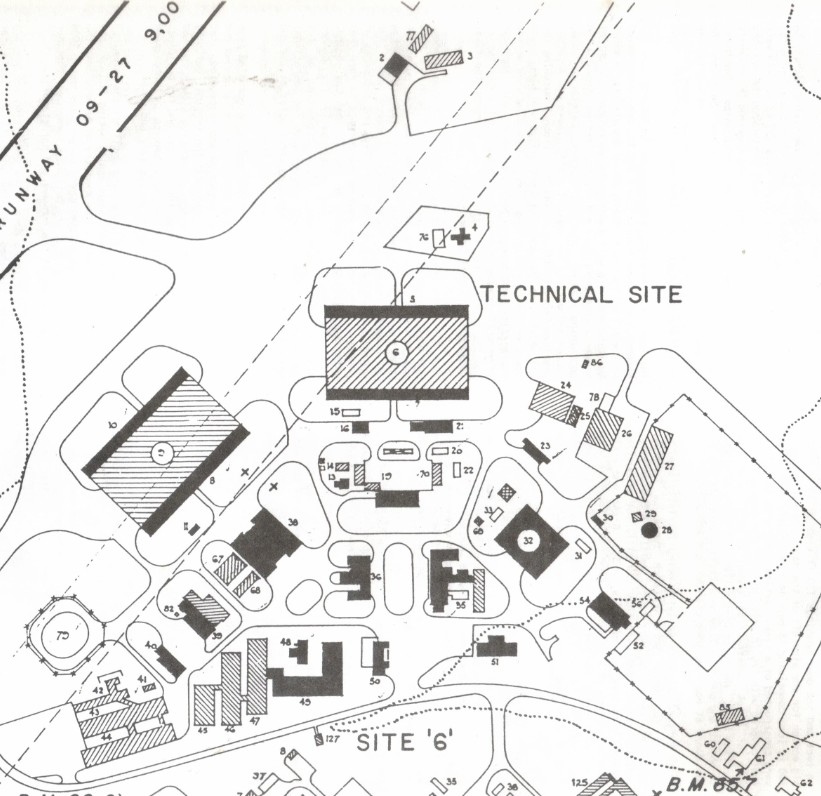
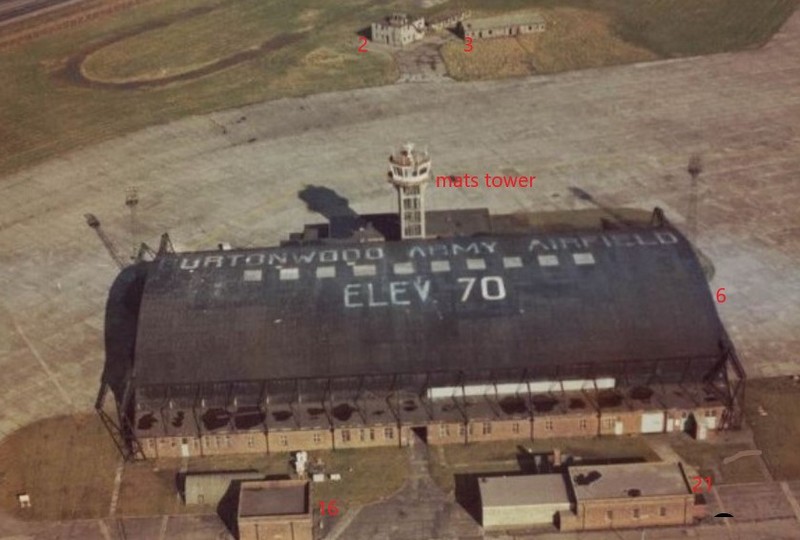
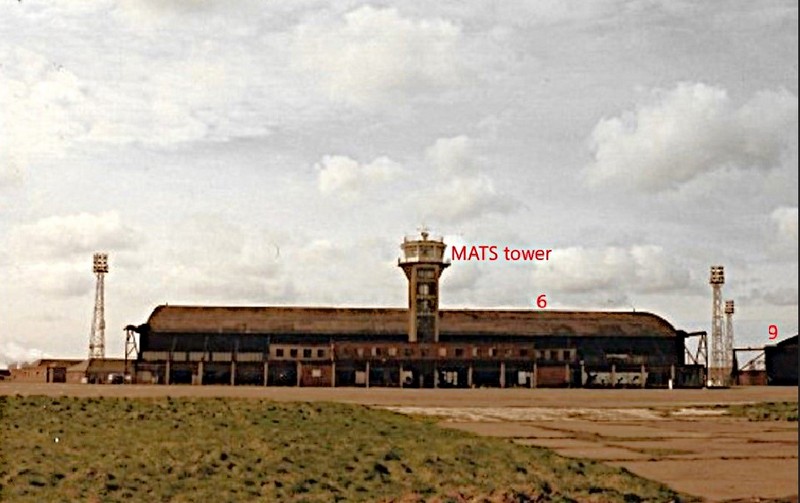
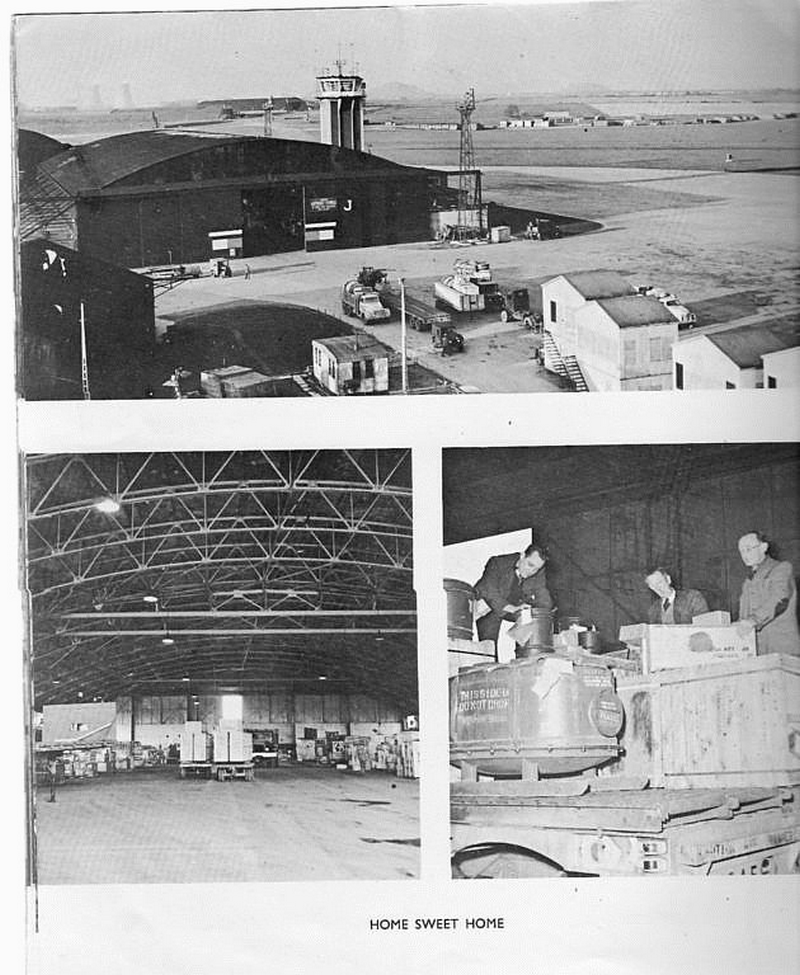
Building 6, the J-Type hangar, is in the centre.Building 16, the oil store is at the bottom left.Building 21, the trailer shed is at the bottom right.Building 2, the WW2 Control Tower, is at the top of the photoBuilding 3, the Ancillary to the Tower, is to the right.The USAAF also used Building 3 in WW2 for the Ferry Pool Squadrons.Next to the front of hangar 6 is the [MATS] Military Air Transport Services control tower US Air Force
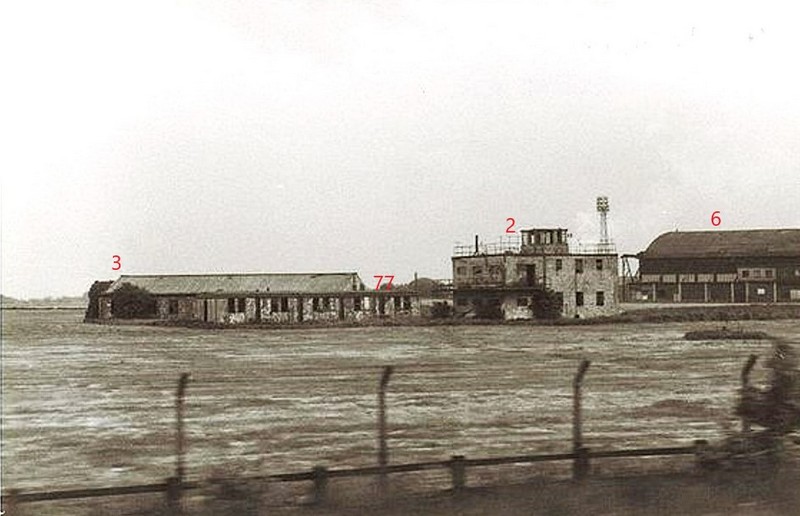
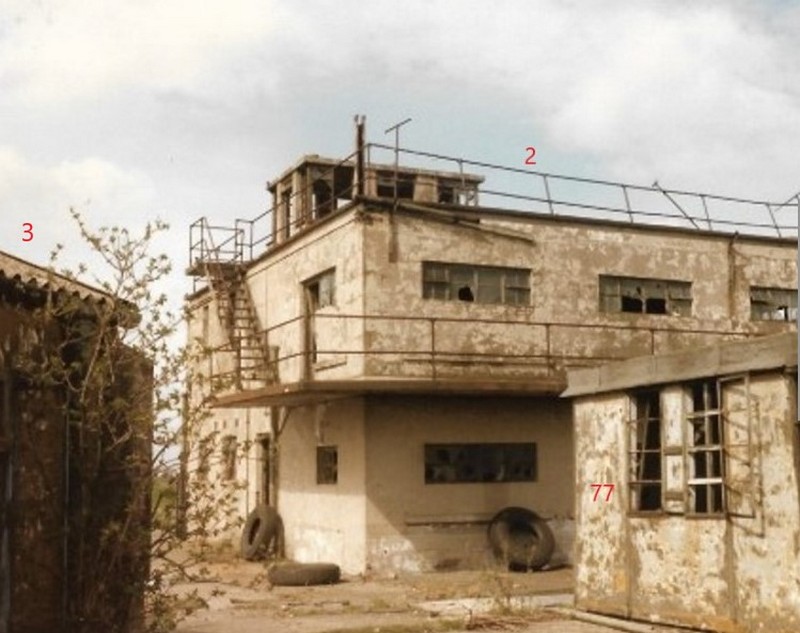
On the left of the photo is building 3Building 3 is the Ancillary to the control towerIt was also used during WW2 as the USAAF Ferry Pool SquadronsBuilding 77 in front of building 3 is a Uni Seco type Building used as the Base OpsTo the right is building 2 the WW2 Control towerTo the far right is building 6 the J-Type hangar.
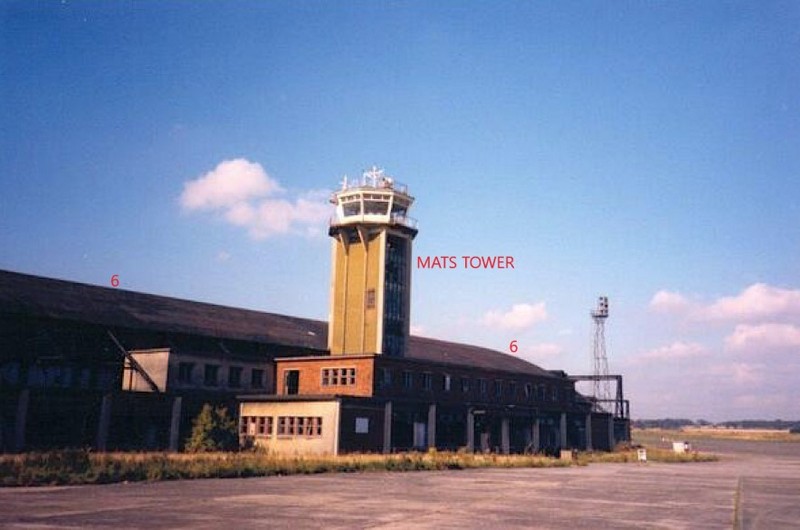
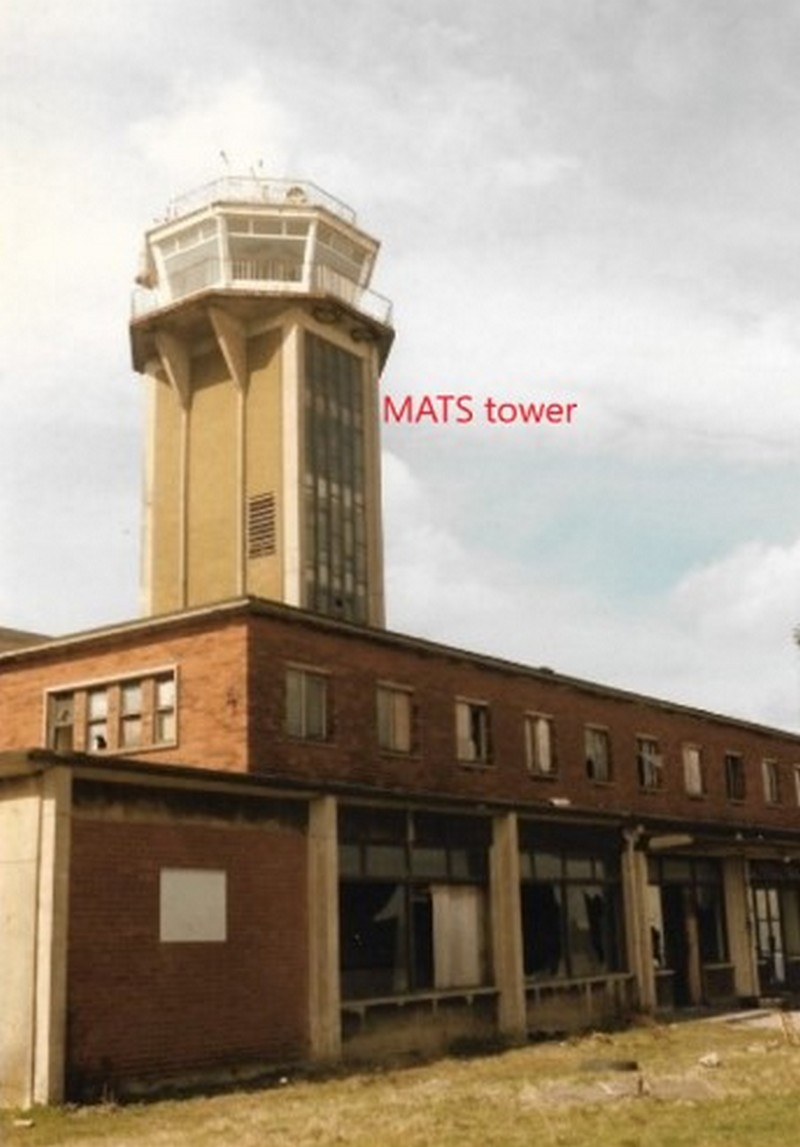
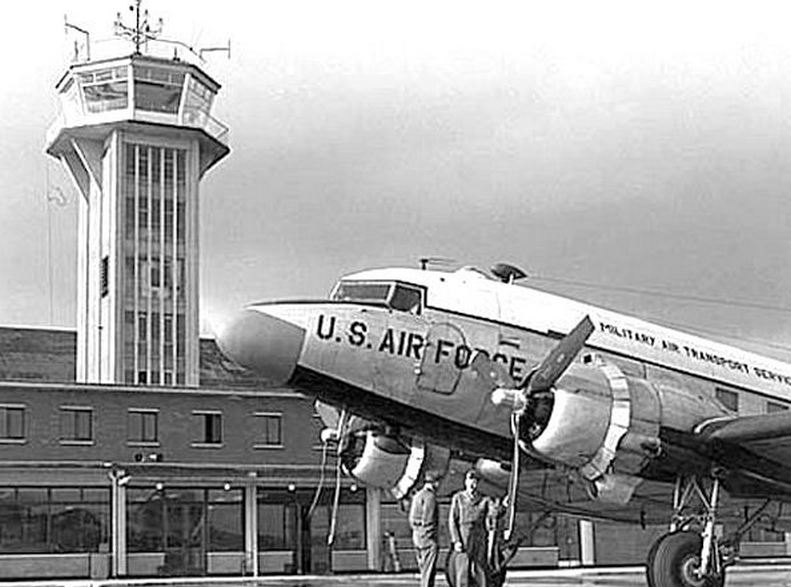
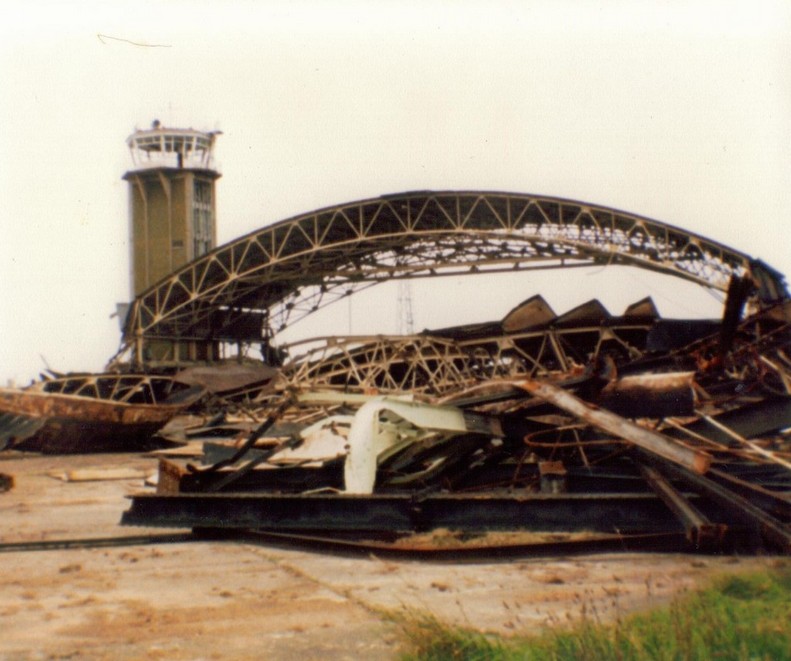
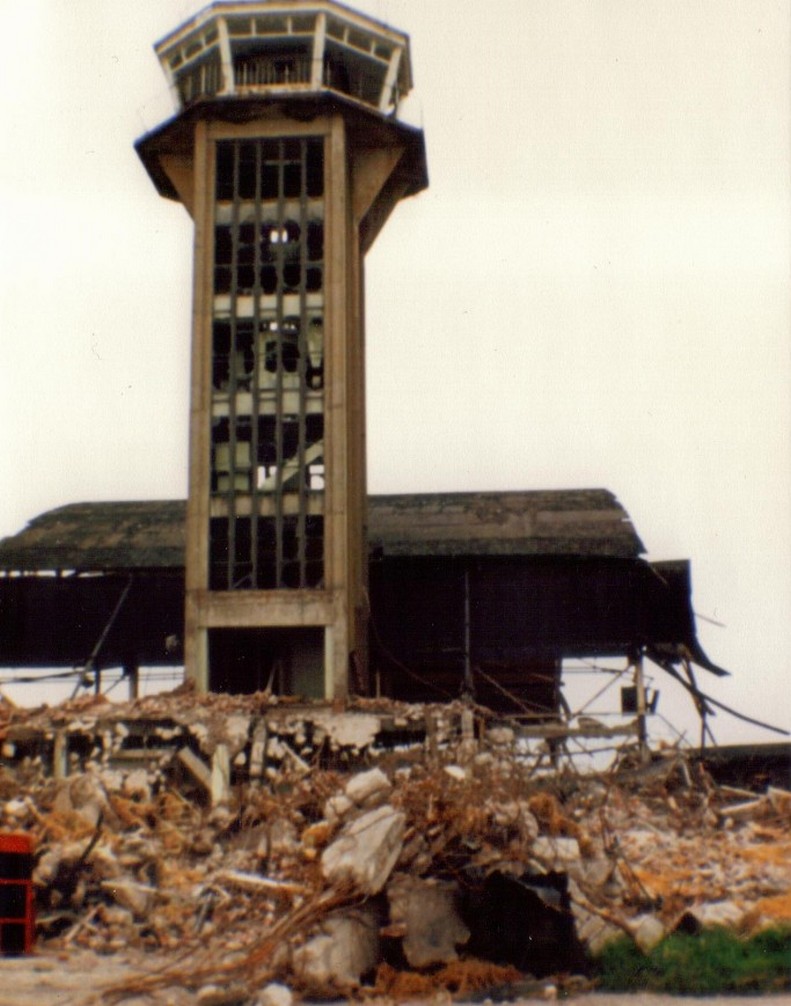
In front of hangar 6 the J-Type hangar is the [MATS[ Military Air Transport Services US Air Force Control tower.The 1965th AACS Squadron USAF operated the [MATS]Control Tower,The tower was 80ft high and gave a commanding view across the airfield and both ends of the main runway 09/27.Also, a new passenger terminal was built in front of the tower and opened in 1953.The last passenger flight left Burtonwood in 1959, the tower and passenger terminal were demolished on 17 April 1989
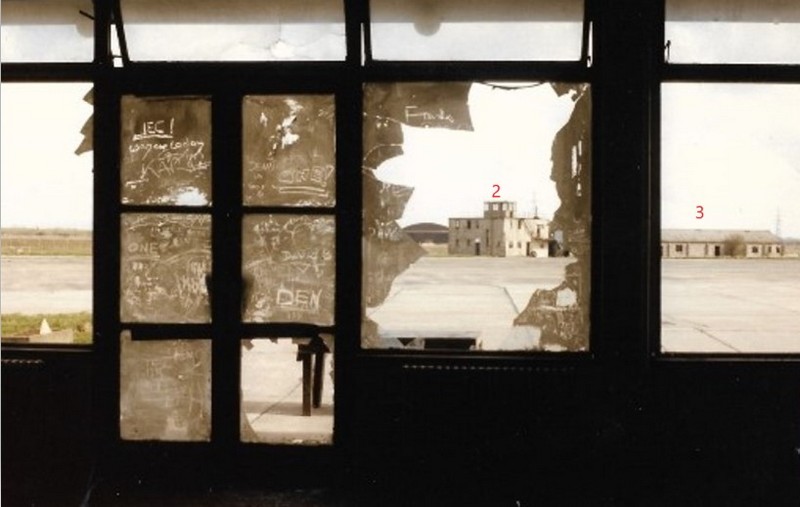
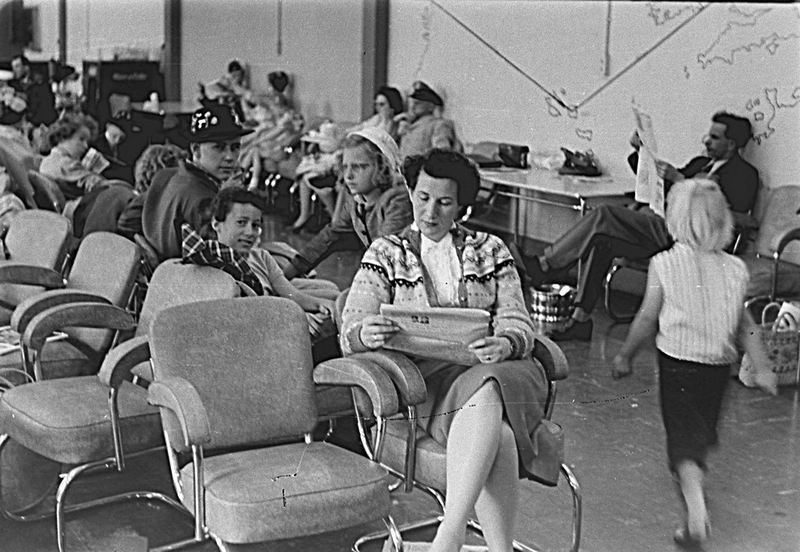
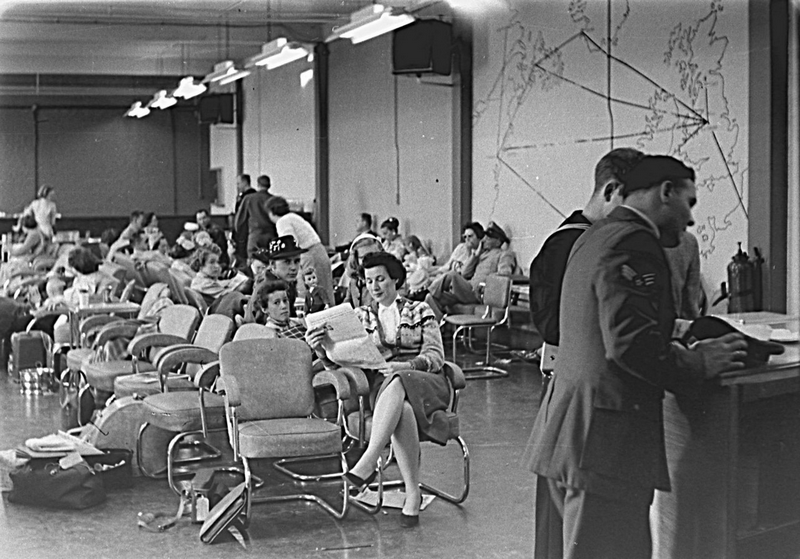
Inside the Passenger terminal looking across the apron towards building 2 is the WW2 Control tower.To the right is building 3, which is Ancillary to the tower and was used by the USAAF ferry pool Squadrons in WW2.
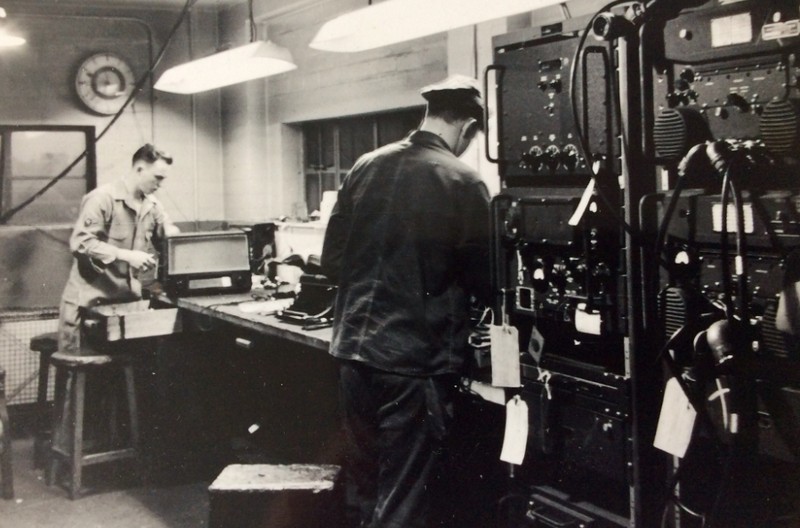
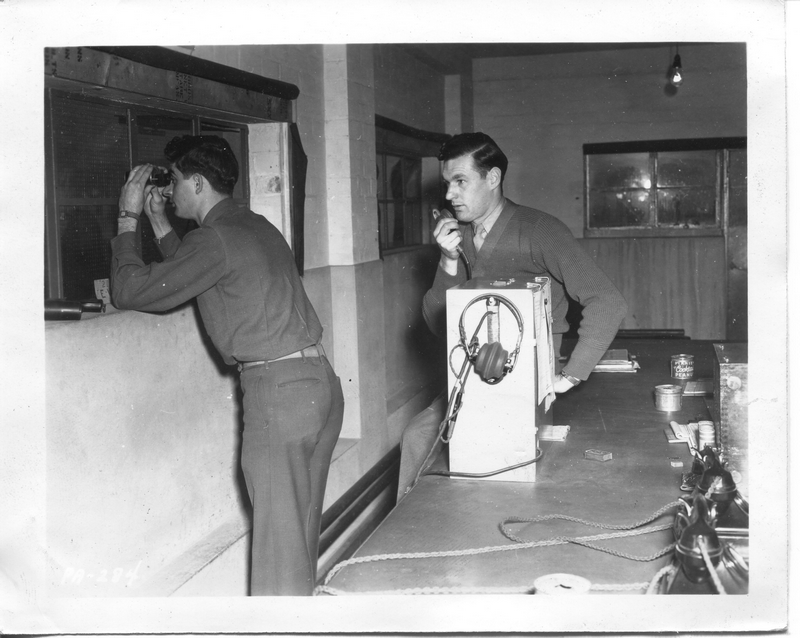
Building 2 is the WW2 Control Tower now reused as the 1965th AACS Squadron Maintenance workshop that was located on the ground floor, while the VHF Radio equipment was located on the second floorThe WW2 control tower also had Transmitters and receiversA hand crank Telephone that was a direct line between the WW2 tower and the MATS Tower was usedTo the Left is Building 3 the Ancillary to the tower and used in WW2 by the USAAF Ferry Pool SquadronsTo the right is a Uni-Seco-type Building 77 used for the Base ops centre
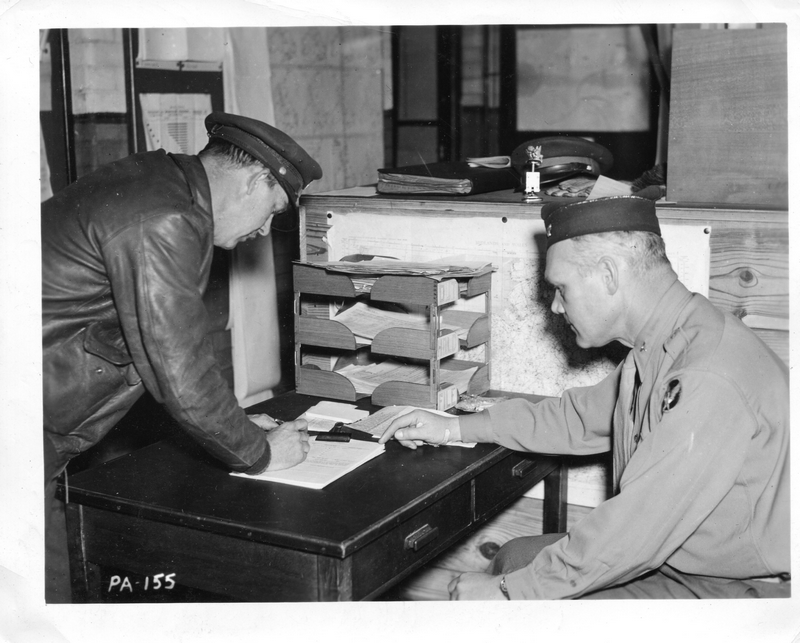
Inside Building 2 the WW2 Control Tower at the Technical site is Roy Badcom and Phill Head of the 1965th AACS Squadron in the Maintenance Radio Workshop
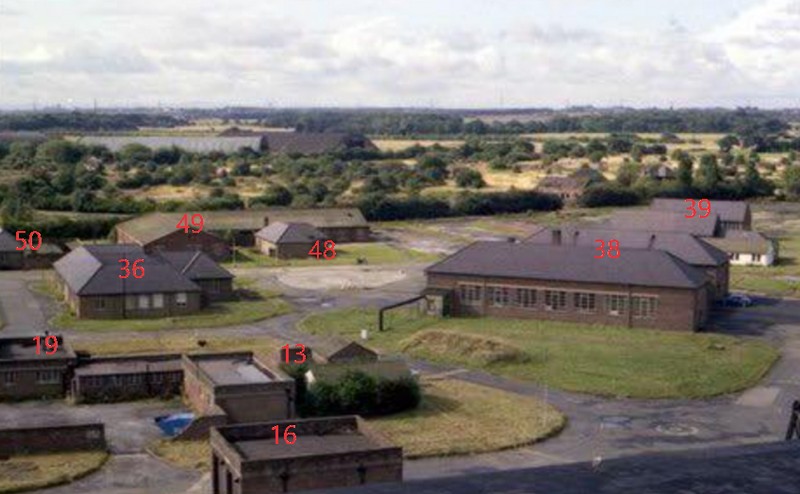
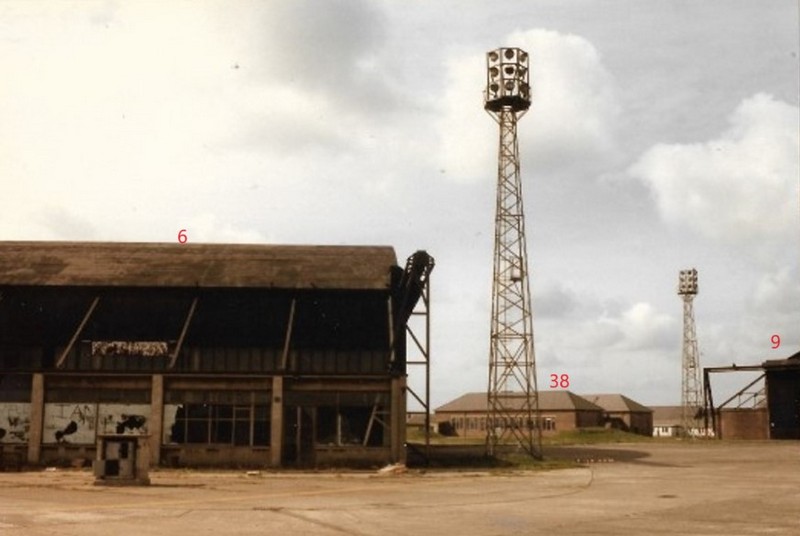
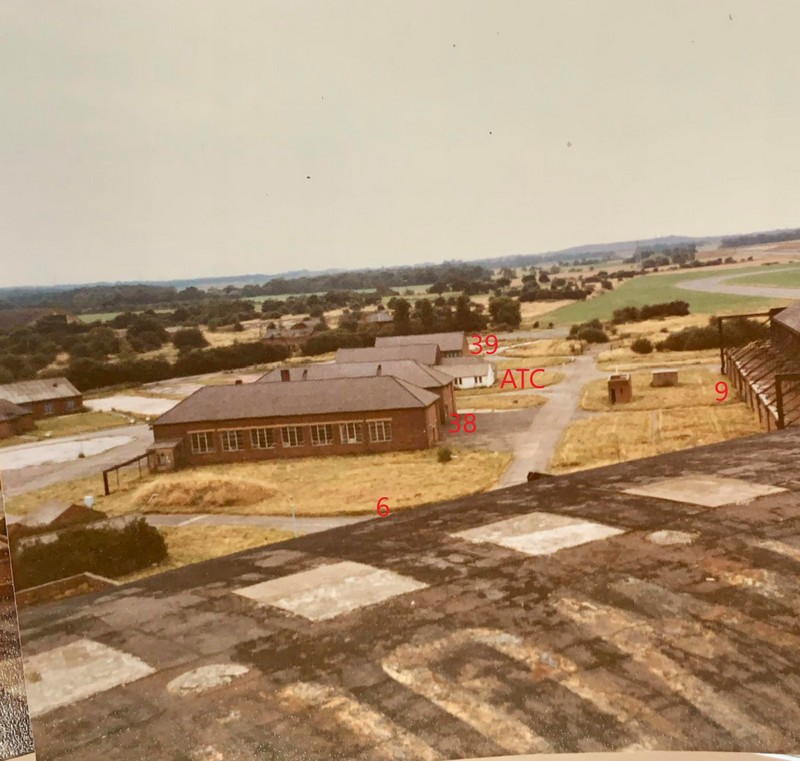
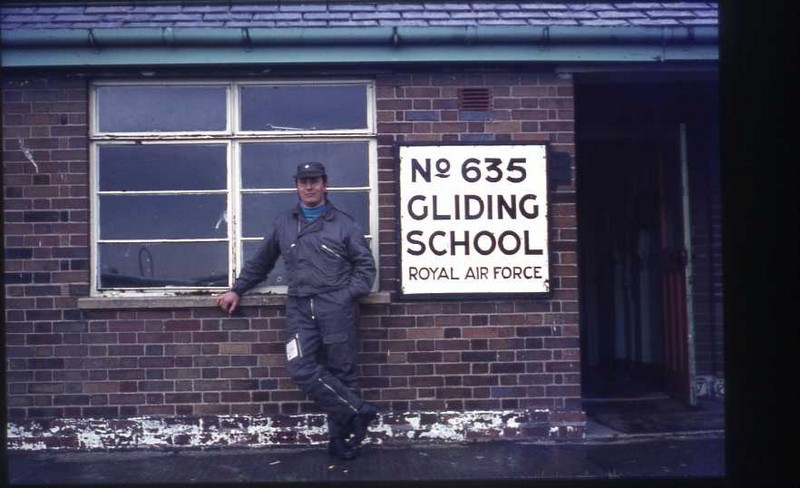
Looking West from the control tower is Building 6 the J-Type Hangar, and Building 9 is the K-Type Hangar Building 38, the main workshops is in the centreThe White ATC Building houses the Air Training Corps and Gliding School Building 39 is the [MT] Mechanical Transport Section that was responsible for the Garaging, Maintenance, and Repair of all the Vehicles on the Airfield
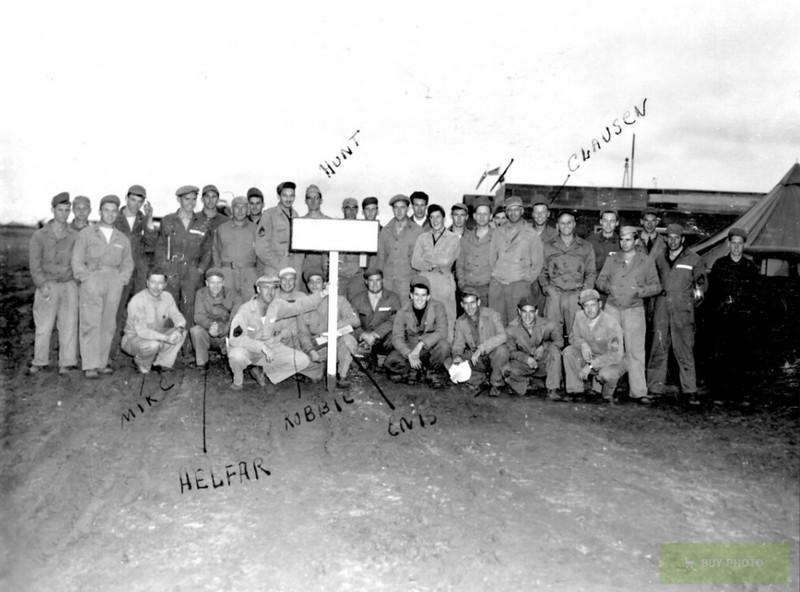
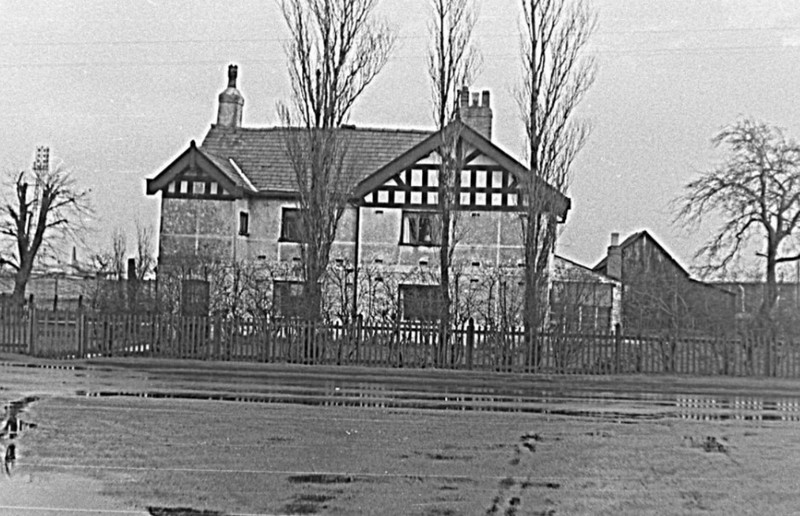
Building 39 The [MT] Mechanical Transport Section Office, Garages Bays, and Yard, Being reused by the 635 Gliding School RAF Burtonwoodphoto credit to Julie Evans 635 Gliding School Air Training Corps RAF Burtonwood
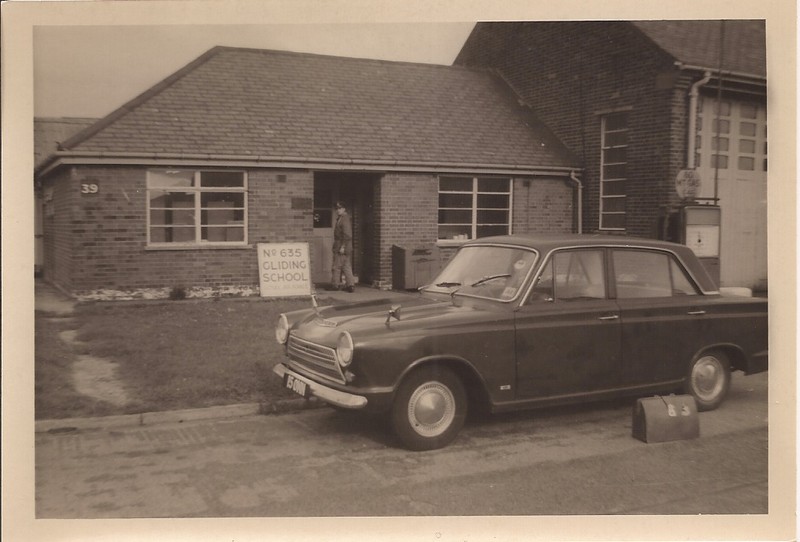
photo credit to Julie Evans 635 Gliding School Air Training Corps RAF Burtonwood
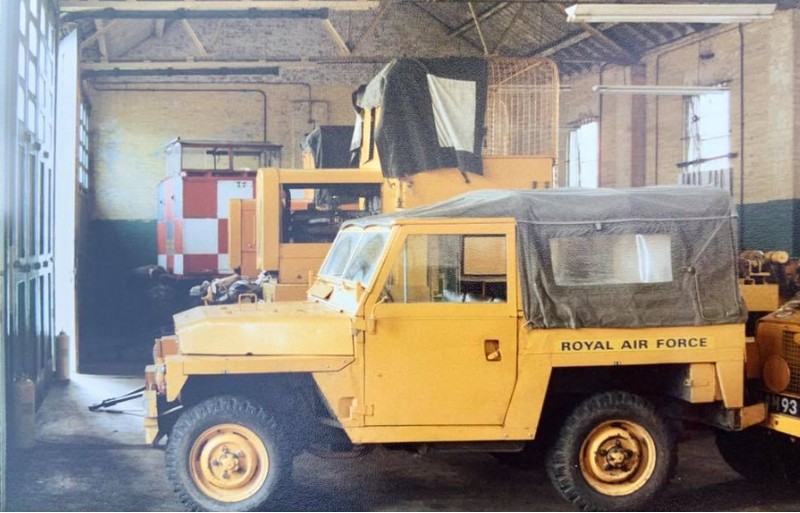
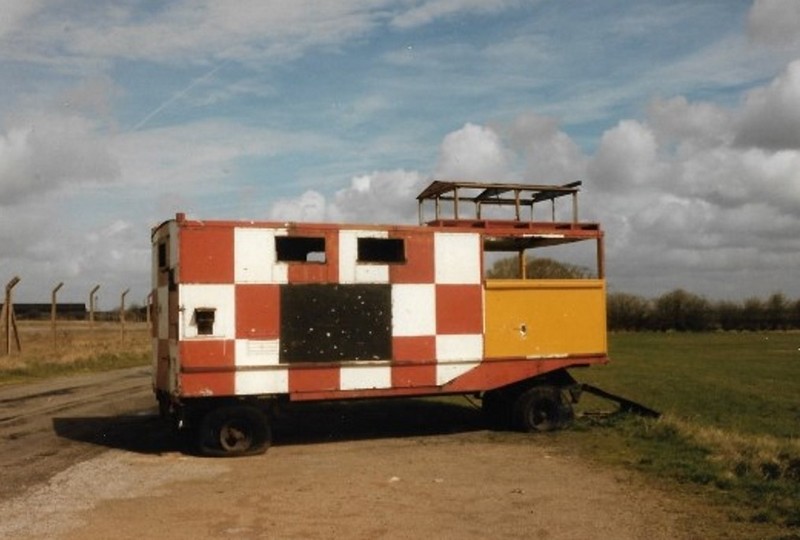
The MT Garage Bays in use by the Gliding School for their Series 3 Land Rovers, Winches, and control CaravanThe RAF Mechanical Transport Section was Responsible for the Garaging, maintenance, and Repair of all the Vehicles on the Airfieldphoto credit to Andy Oultram 635 Gliding School Air Training Corps Burtonwood
building behind the back of building 35
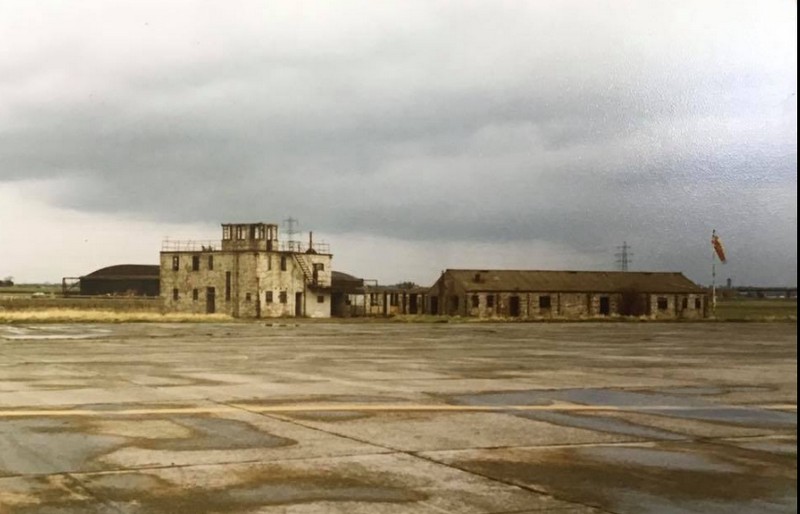
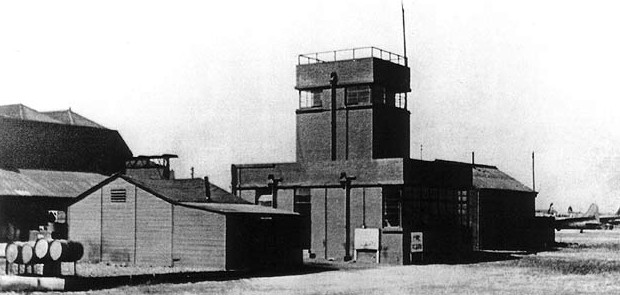
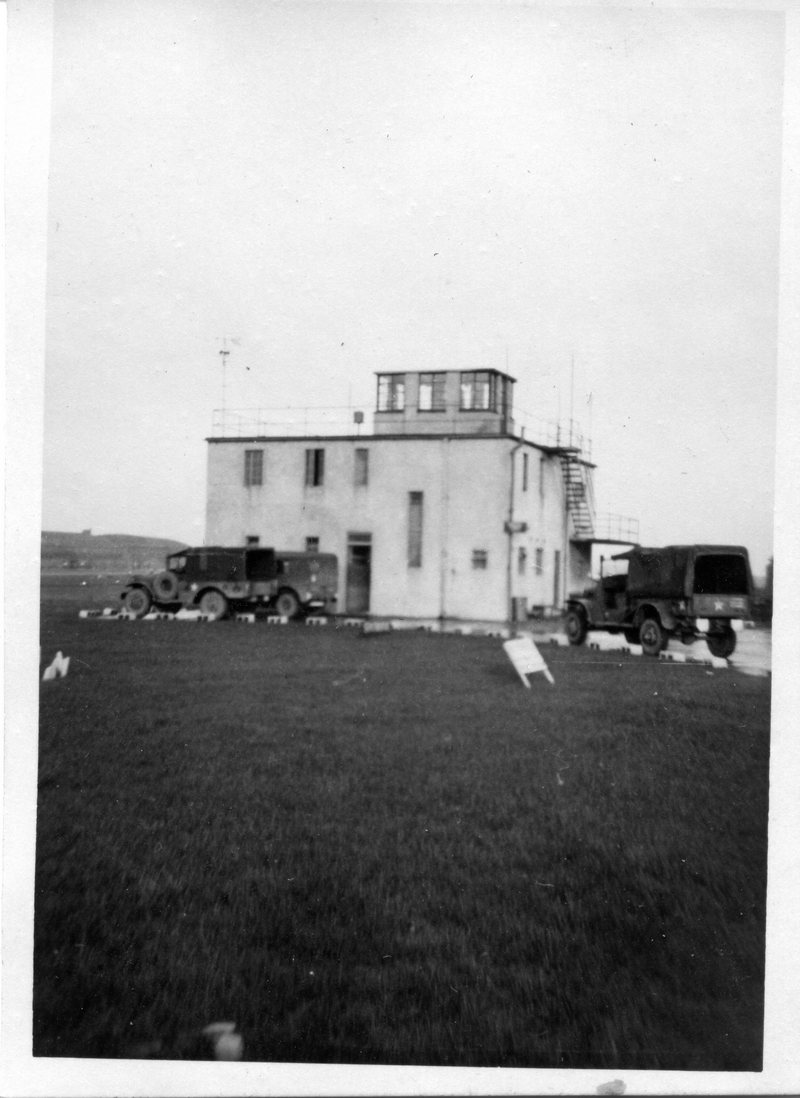
This is Building 2 and is a photo of the 2nd Control Tower to be built at Burtonwood and was 'The RAF Control Tower' for 'All Commands' built to Air Ministry drawing No. 12779/41 & was sited next to the main runway 09/27. This control tower was being used between 1942 - 1953 by the USAAF During ww2 until the new post-ww2 United States Air Force Control Tower was built. Building 77 isThe white Uni Seco building to the right of the Control Tower and is the Base Operations Centre. Building 3 to the far right next to the windsock is the Ancillary to the Control Tower and was used during ww2 by the United States Army Air Force as the Aircraft ATC Ferry Centre. A-site hangars can be seen in the background
K-Type hangar on the left & the J-Type Hangar on the right at the Technical Site

of the photo was originally built as the canteen block & was being used as a Group Headquarters Building
in design to Building 35

standard RAF Type Station Headquarters Building used by the USAAF during WW2
Wing Headquarters
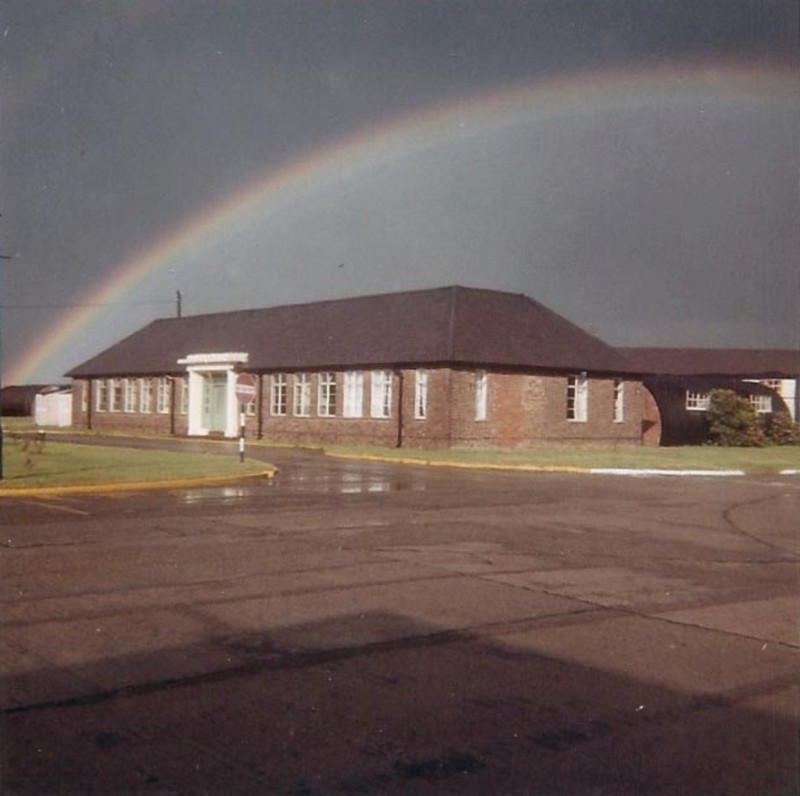
Headquarters Building during WW2 was under the control of the United States Army Air Forces

the K-Type hangar with 635 VGS at the Technical site during 1982 Slingsby XN185 is in the foreground

passenger terminal in front of the J-Type hangar at the technical site at Burtonwood

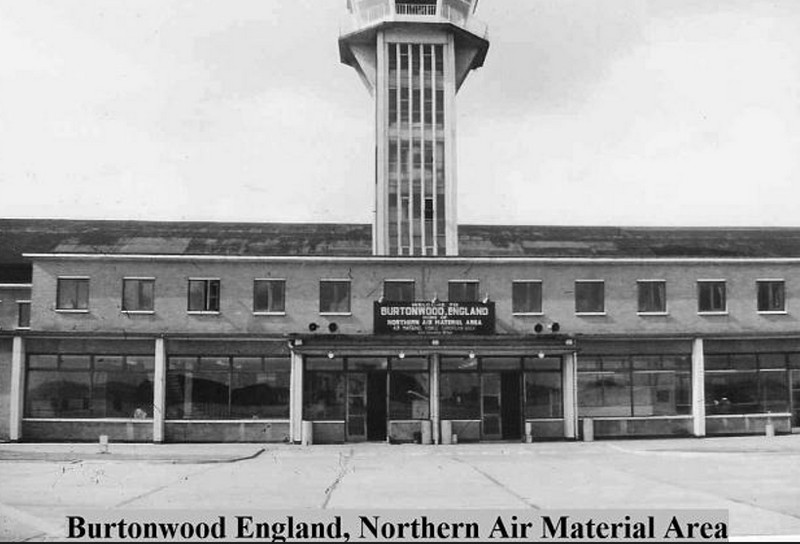
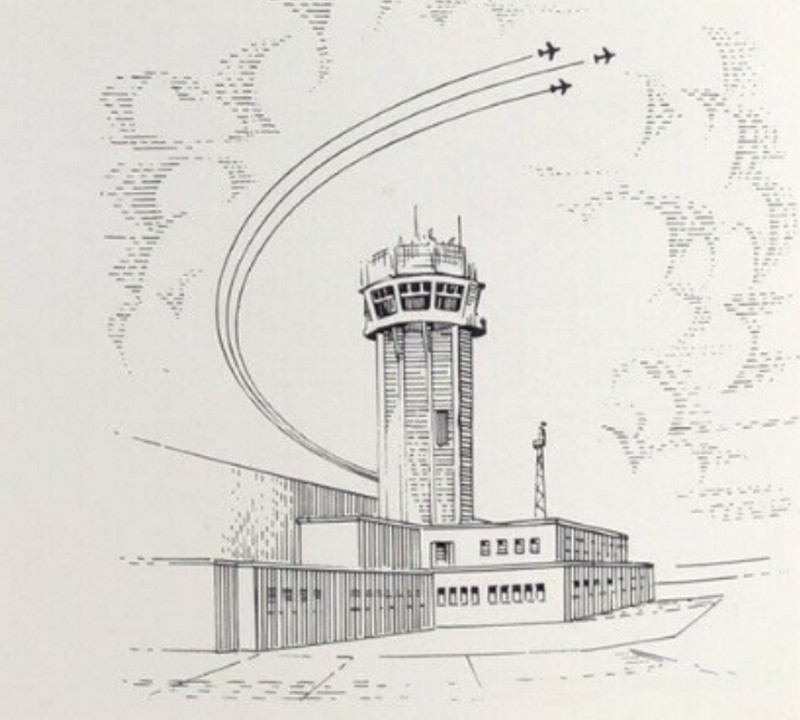
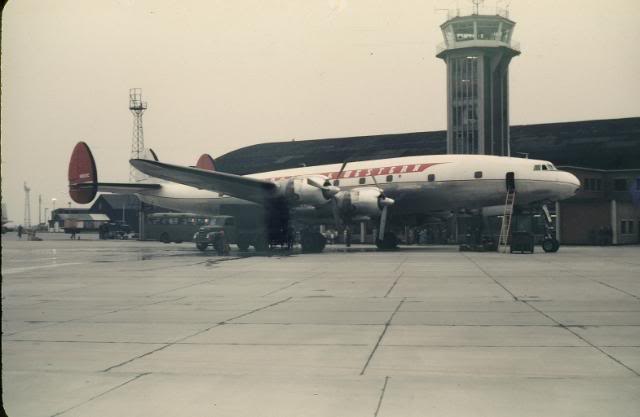
The new 80 ft high tower gave a commanding view across the airfield and both ends of the main runway 09/27 The control tower and passenger terminal opened in 1953 and were staffed by the 1965th AACS sq USAF for [MATS] Military Air Transport Services The passenger terminal contained American Express, Customs, Lounge, Newsstand, Immigration, and Emigration The last passenger flight left Burtonwood in 1959. The control tower was demolished on 17 April 1988. The photo was taken on the 1956 public open day.
Technical site Building 2
on the right & Building 3 the Ancillary to the tower is on the left
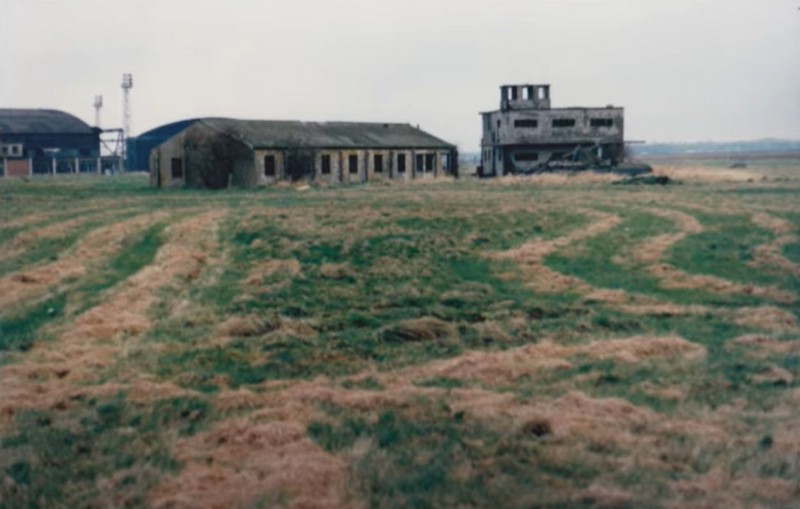
right of the photo are the overgrown Ident Letters for RAF Burtonwood Airfield

constructed to air ministry drawing number 3084/39
hangars are built across the airfield at A-Site
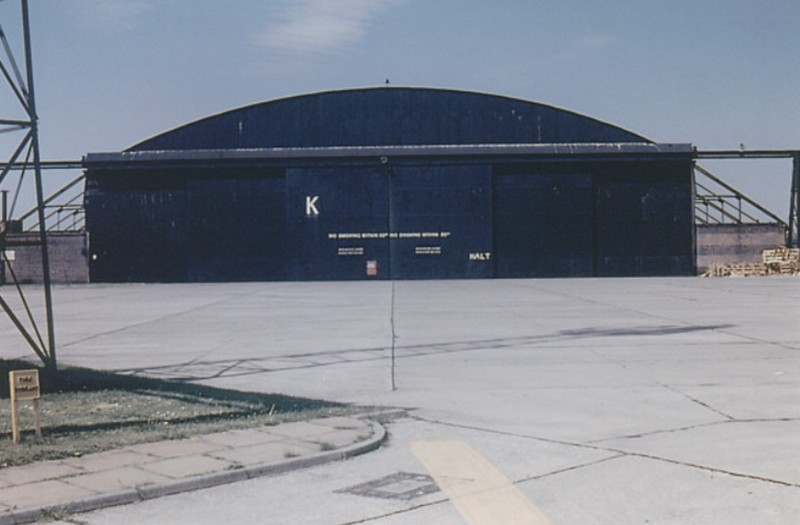
38 that is the main workshops, and in the background is building number 9 which is the K-Type hangar
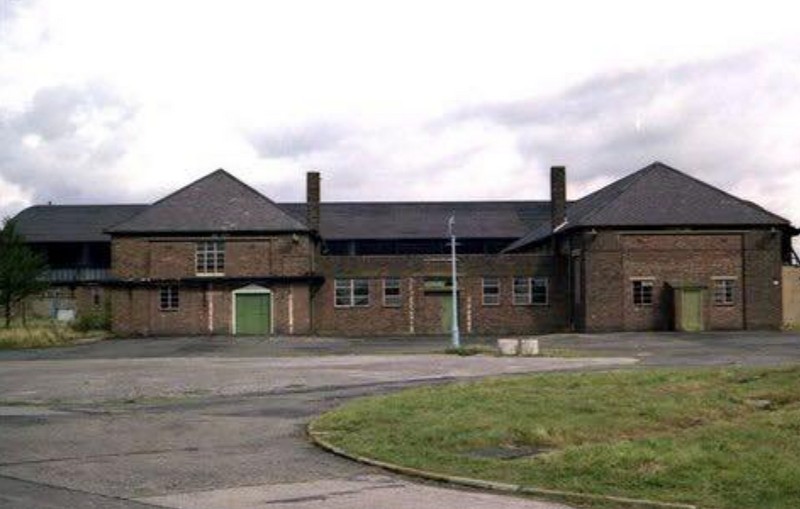
48 which is the Gas decontamination center type 'F'
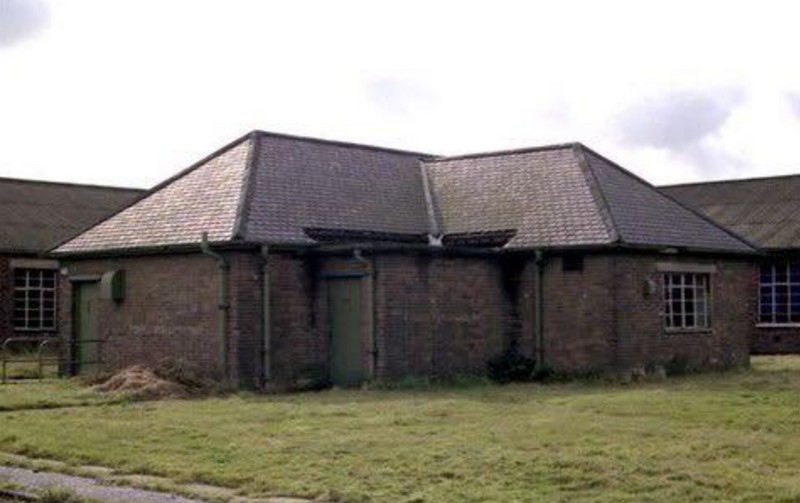
building number 49 which is part of the crash fire station section
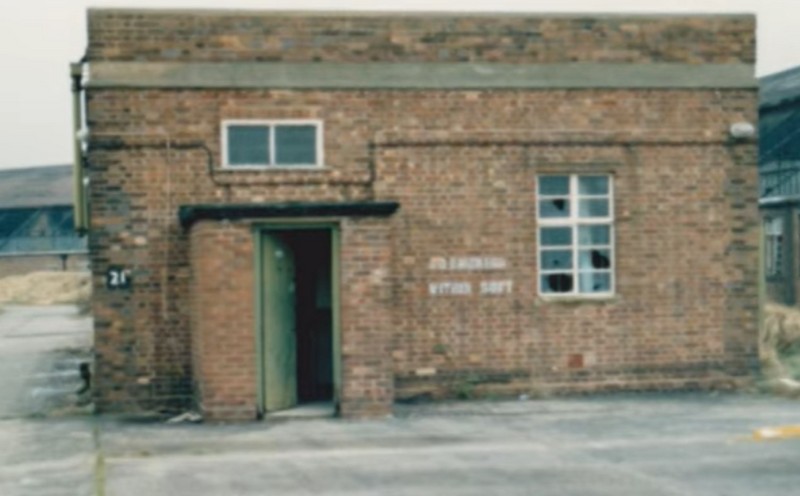
entrance of the trailer Shed
terminal in the 1950s
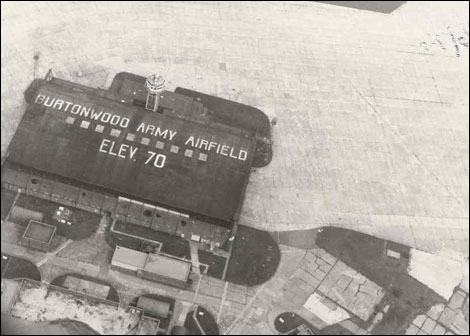
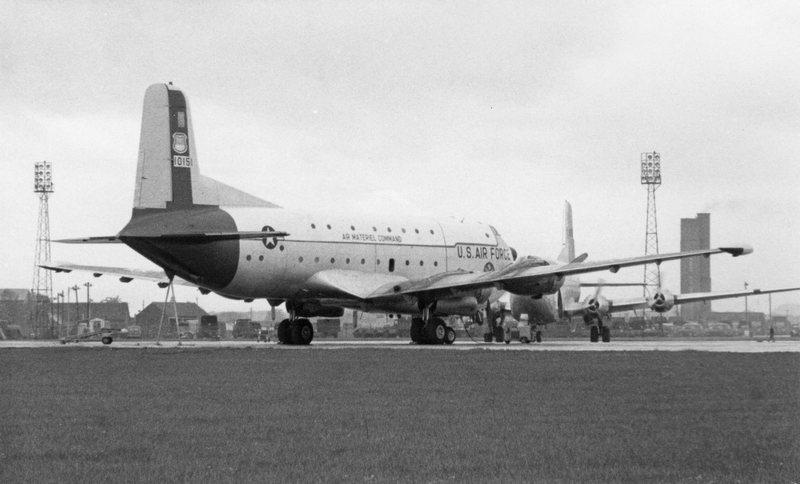
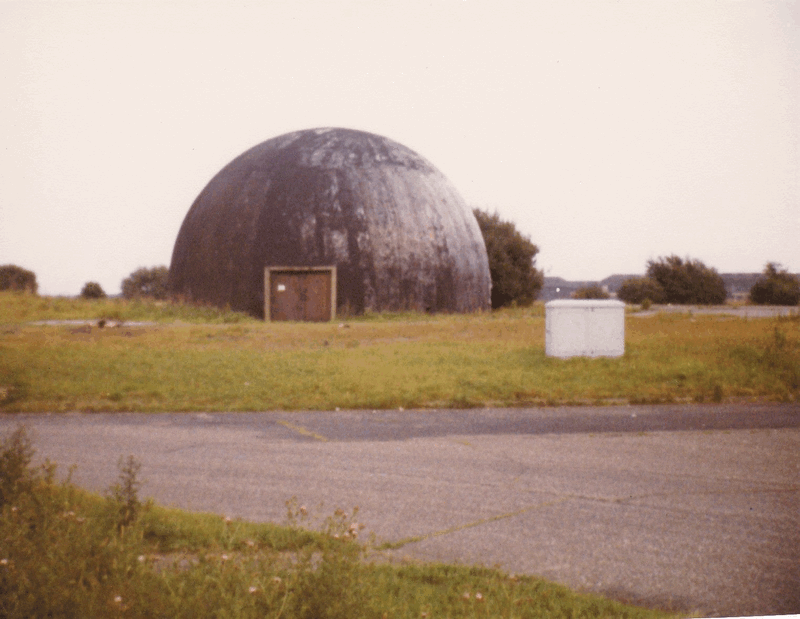
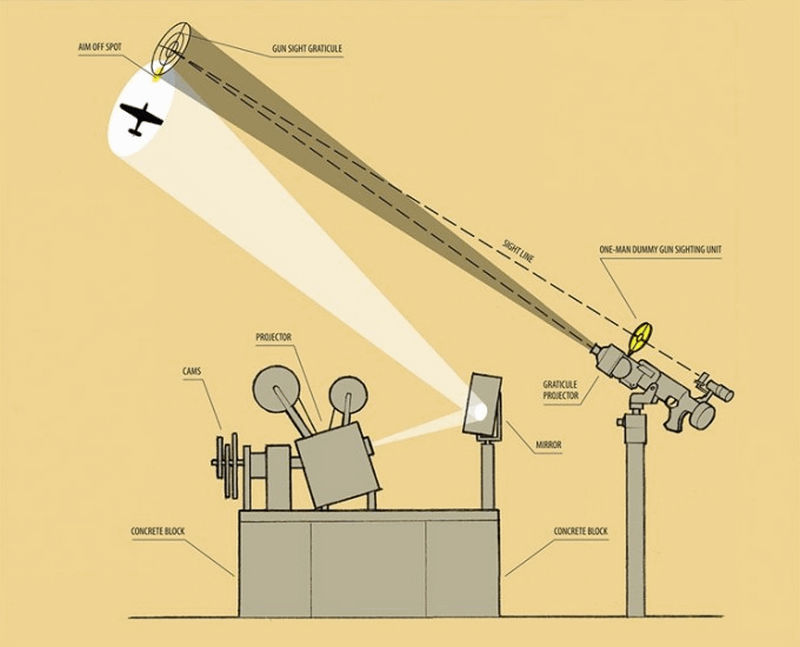
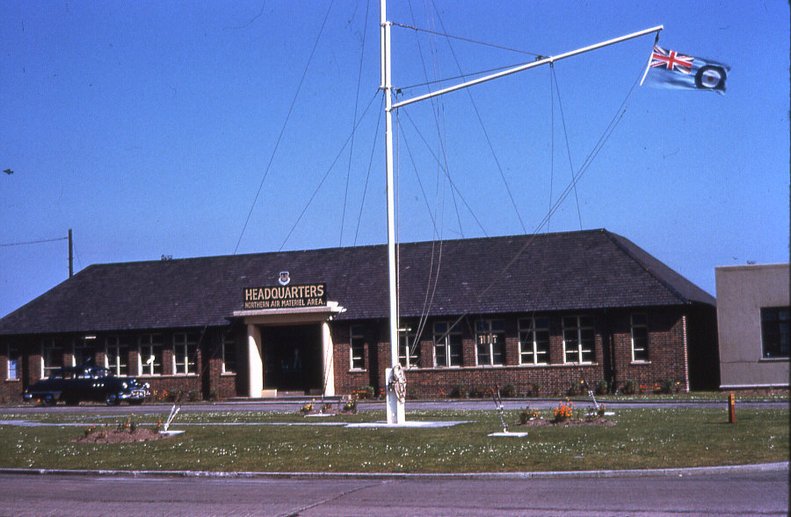
Construction began on tech site in 1939 on farm land belonging to Brooke House Farm. Tech site opened on the 1st of April 1940 and was used by the Royal Air Force No. 37 Maintenance unit, for the storage and modification of British aircraft transferred to the United States 8th Army Air Force in June of 1942 as Base Air Depot 1 (BAD 1) and became the centre for flight testing, overhaul, modification, and repair of all USAAF aircraft. The USAAF left in 1946 but they would not be gone for long .... In July 1946 No. 276 Maintenance unit RAF was formed as an equipment depot and the hangars were used for the storage of Spitfire's & Lancaster's. In 1948, the USAF were back using RAF Burtonwood as a maintenance base for C54 Skymaster's and other aircraft for 200 hour inspections and servicing, turning out 7 aircraft a day during the Berlin Airlift. In September 1953, Burtonwood became USAF Northern Air Material Area & during these dates from 1953 - April 1959 the 53rd Weather Reconnaissance Squadron with long range Boeing WB29, then later WB50D Super-Fortresses were stationed there. Military Air Transport Services (MATS) Aircraft were also based here until 1958. Tech site was the main headquarters, administration and stores and spares centre. The buildings were built of permanent brick with slate roofing. When entering the site, the guard room was on the left. Opposite the guard room was an open square with the headquarters buildings located on either side. Also, building 28 - a black dome gunnery trainer which had no windows. This building should never have been built at Burtonwood, but many RAF stations were built to house both maintenance unit and flying training school. The building contained a gun turret and a projector and the projector would project images of enemy aircraft on the walls for the gunner to be 'trained' to shoot at.
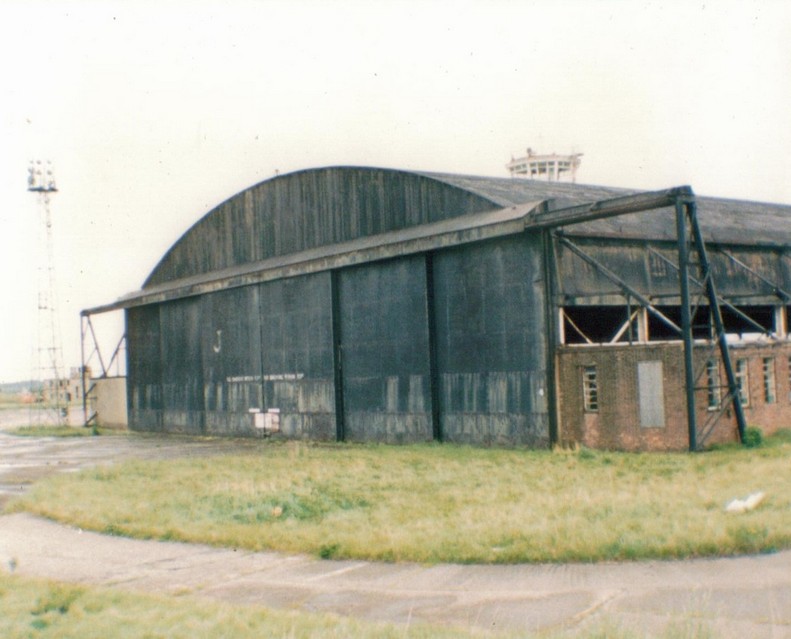
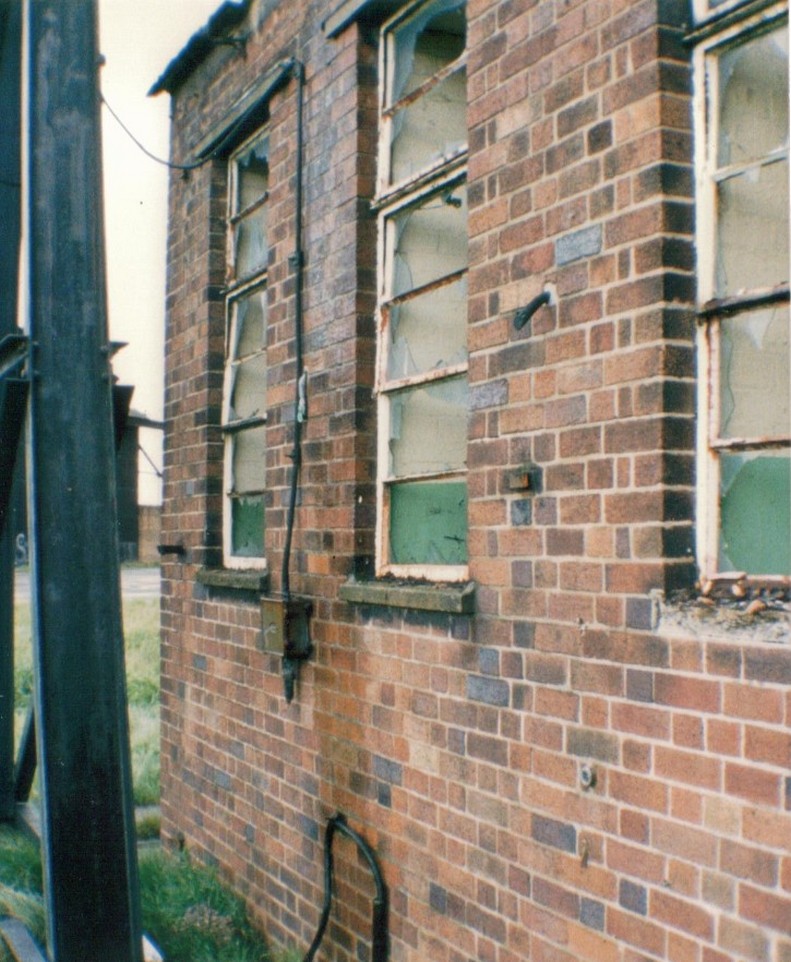
2 aircraft hangars were built .... building 6 'J' type, built to air ministry drawing number 5836/39 and building 9 'K' type built to air administry drawing number 3084/39. The hangars were constructed of a steel lattice frame with a curved roof covered with 1/4" steel plate. The side of the hangars had 2 brick annexes running the full length of the hangars built of brick constructed under a flat reinforced concrete roof. The hangar doors were filled with gravel or sand to absorb any enemy gunfire. The dimension of the hangars were: Door openings = 150' Wide x 30' High. The hangars are 300' Long comprising of 18 bays 16' 8" each in depth. Covering 46,206 Sq feet. The 'J' & 'K' hangars look identical, the difference being that the positioning & number of roof runway beams used for lifting gear are different for each hangar. The 'J' has 2 half ton runway beams at each end of the hangar & 1 x 6 ton at the centre running the width of the span. The 'K' has 10 runway beams running the full length of the hangar. The 'J' had annexes along both sides of the hangar which were used for offices & workshops. The 'K' had the same but being used for storage.
3 x Control Towers were built on the airfield.
1st Control Tower - to be built was a 'Fort' type on Mary Ann Site and this was to air ministry drawing number 207/36 concrete, as building of the airfield progressed it became apparent that the view of the main runway became obscured and therefore the 1st control tower was demolished. (Photo USAAF 1942)
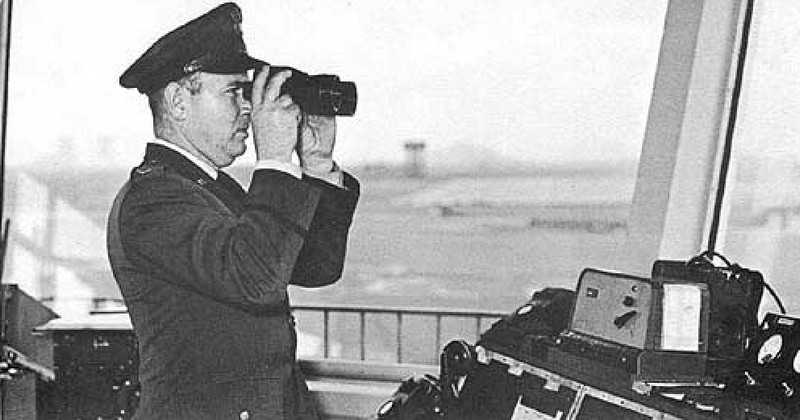
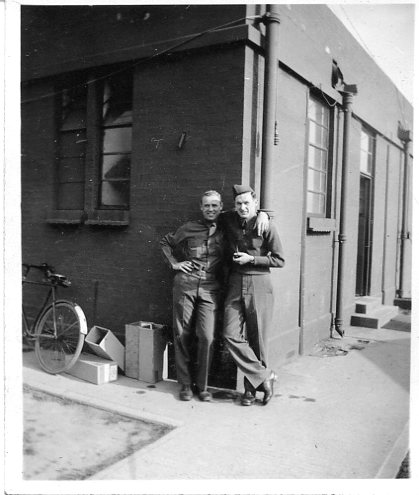
Burtonwood - Flying Control personnel - 1 May 1943 Cpl Snellinger & S Sgt Zimmerman by original control tower (Photo From The American Air Museum in Britain - Ray Zimmerman Collection via Aldon Ferguson)
2nd Control Tower - to be built was 'The RAF Control Tower' for 'All Commands' built to air ministry drawing No. 12779/41 & were sited next to the main runway 09/27 & this control tower was being used between 1942 - 1953.
Site October 1944 (Photo From The American Air Museum in Britain - Ray Zimmerman Collection via Aldon Ferguson)
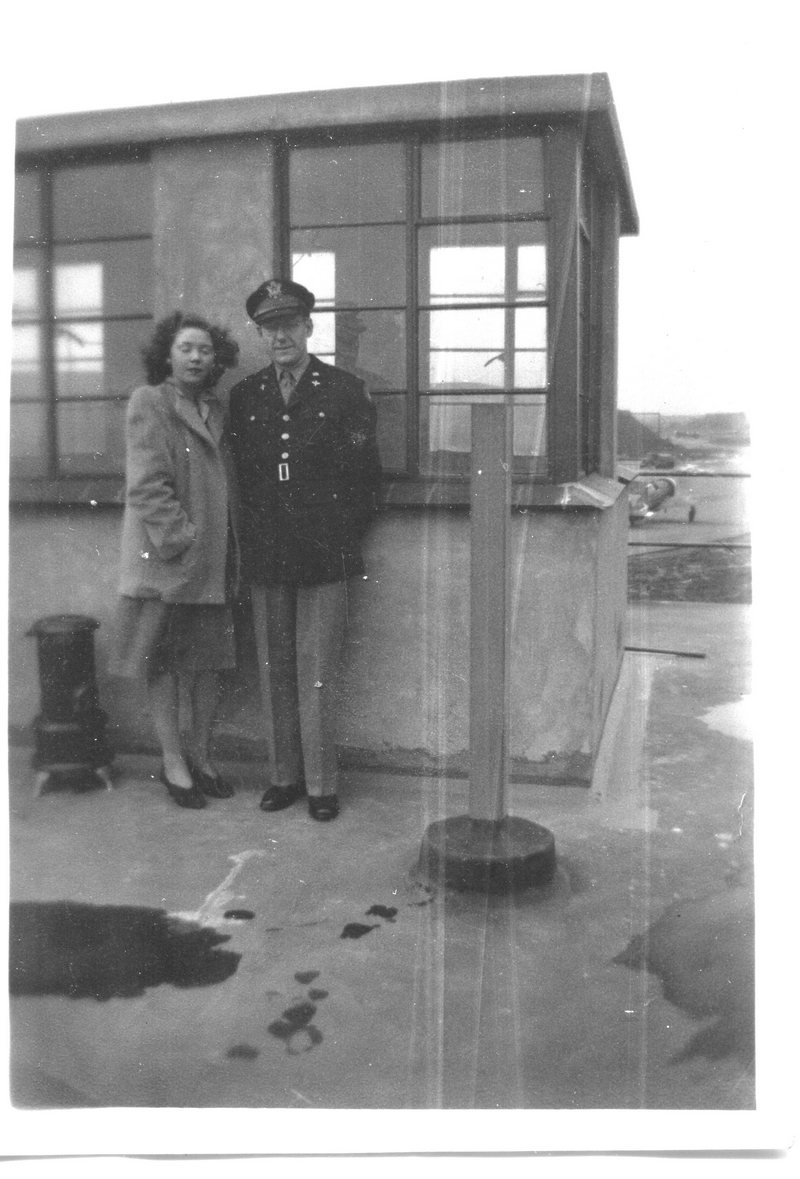
Burtonwood - 1944 Brenda Watson, girl friend of Capt Maier- test pilot - with 2nd Lt Steinfeld on tower (Photo From The American Air Museum in Britain - Ray Zimmerman Collection via Aldon Ferguson)
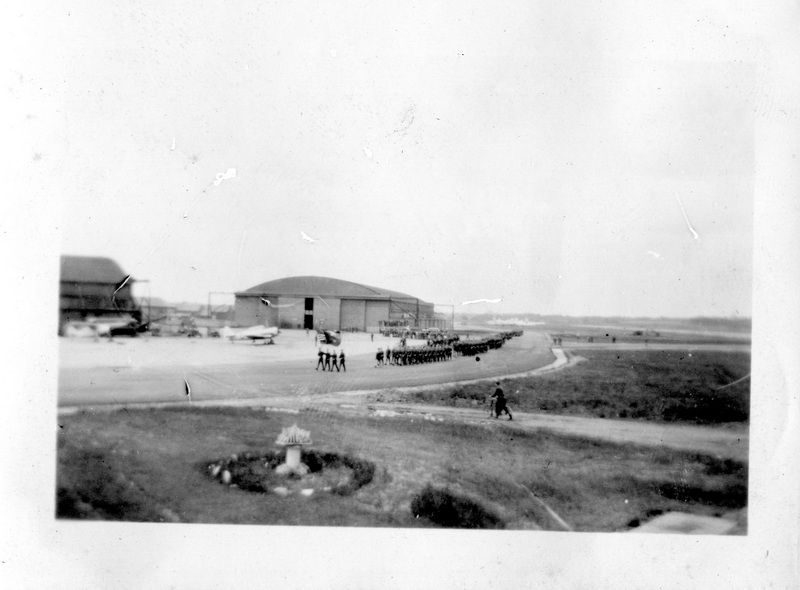
(Hangar 'J' on The Left & Hangar 'K' on The Right) Showing a Parade in Progress on Tech Site 1945 (Photo From The American Air Museum in Britain - Ray Zimmerman Collection via Aldon Ferguson)
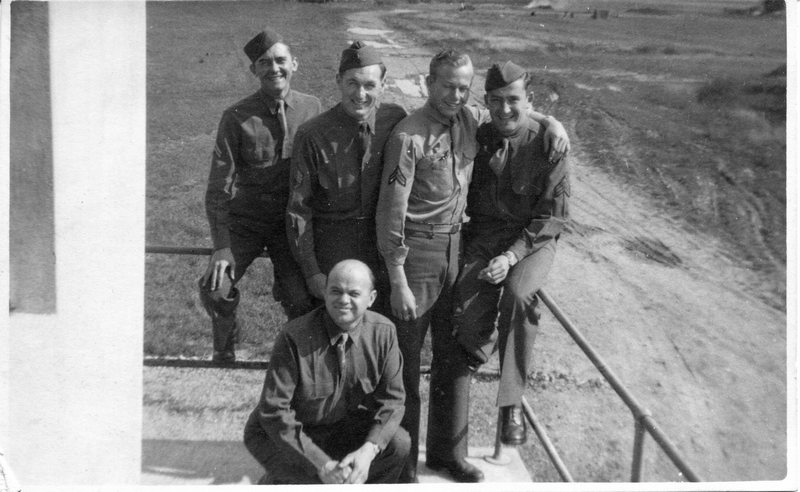
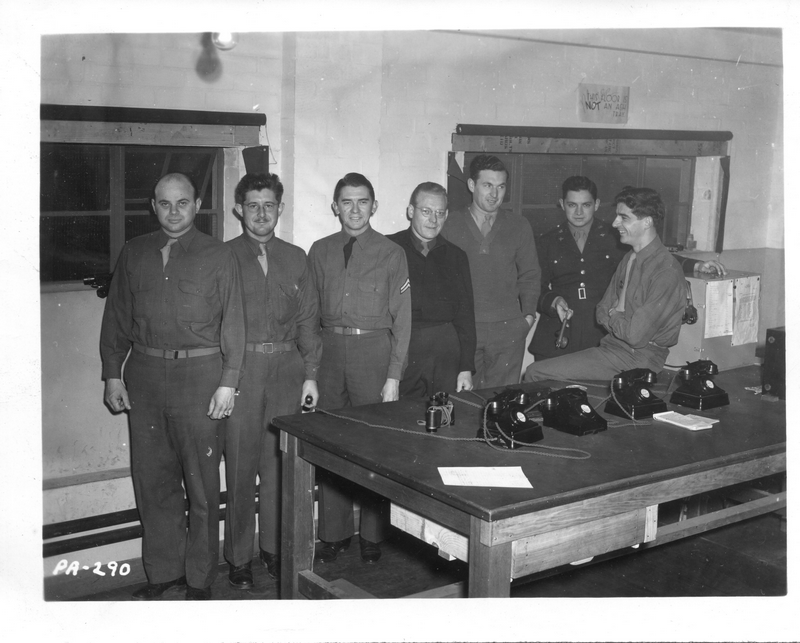
Burtonwood Flying Control New tower 20 Oct 1943 L-R Sgt Austin (Illonios) S/Sgt Ray Zimmerman Sgt Gordon C Stockinger Sgt I Solomon & Pfc Bachrack. Photo From The American Air Museum in Britain - Ray Zimmerman Collection via Aldon Ferguson
Burtonwood Flying Control 24 Sept 1943 L-R Pfc Bachrack 2nd Lt Steinfeld pilot Pilot Major Fred R Casoli (Officer Commanding) S Sgt Ray Zimmerman & Pfc Demos (Photo From The American Air Museum in Britain - Ray Zimmerman Collection via Aldon Ferguson)
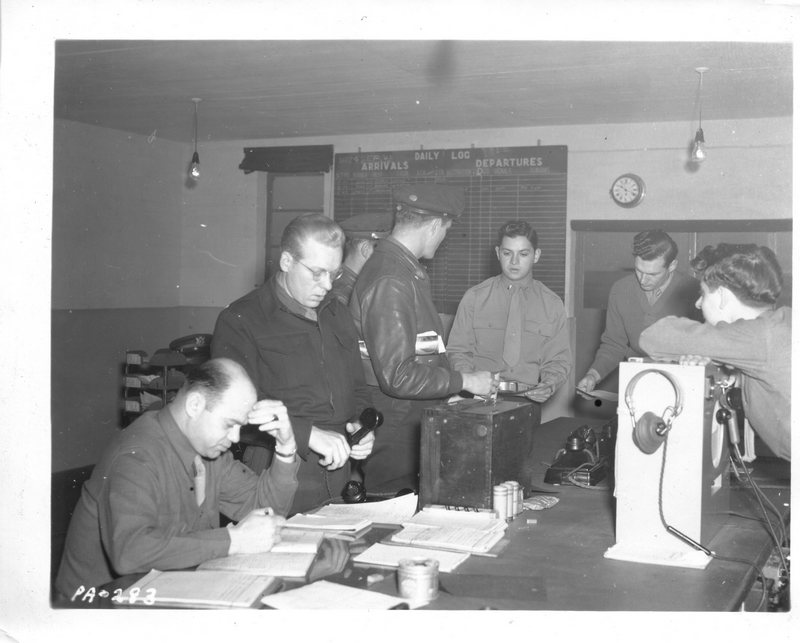
inside the tower 14 April 1943
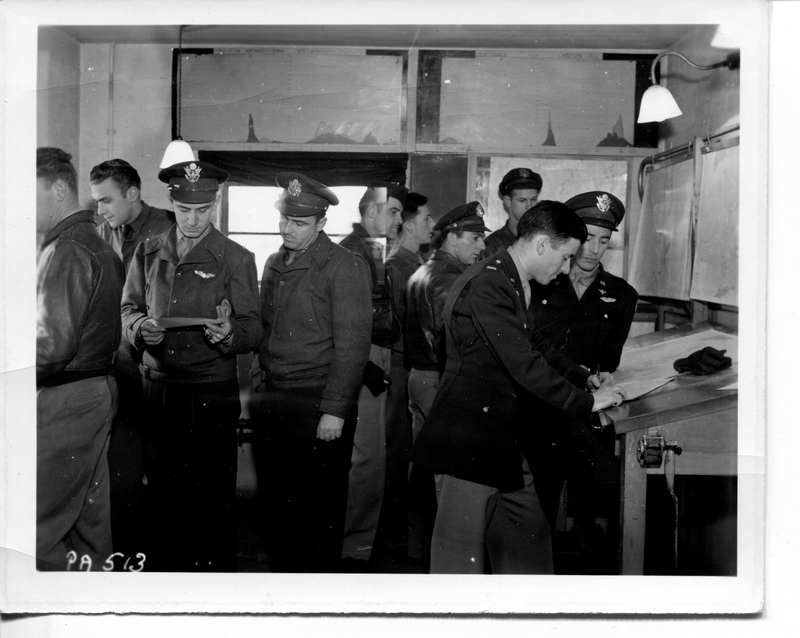
standing and Walter Schnellinger July 1943
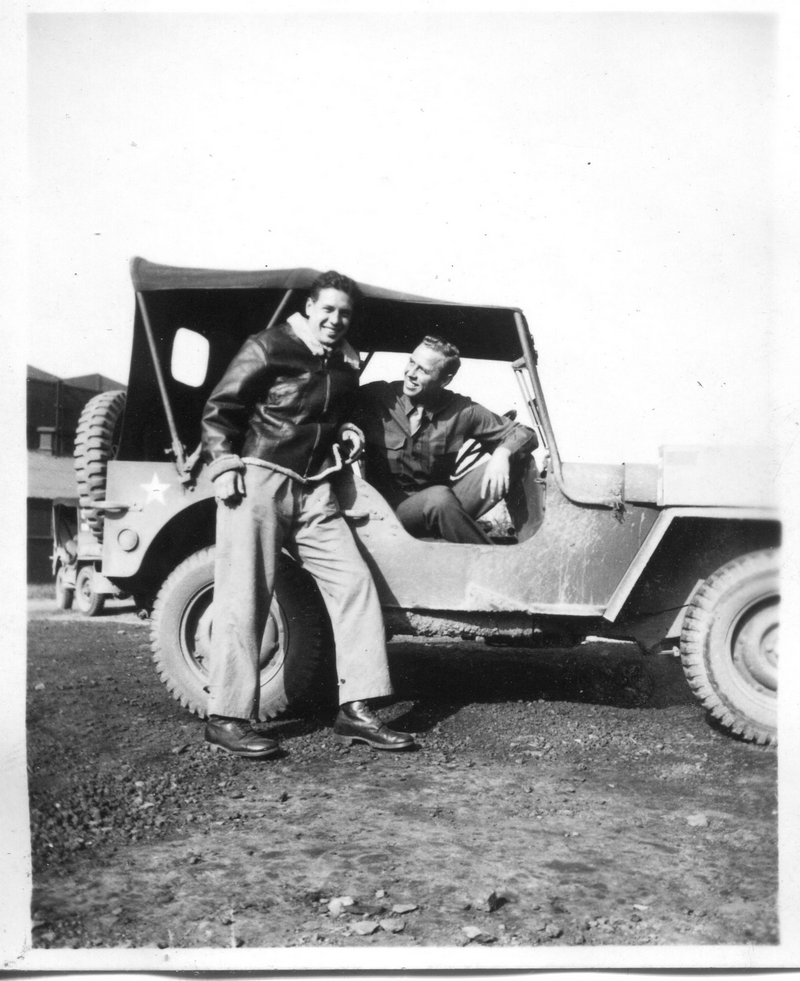
SGT?, SGT Austin, 2nd LT Steinfeld, SGT Ray Zimmerman, Major Fred, R? 24 September 1943.
tower to the left is PFC Demos and to the right S-SGT Zimmerman 24 September 1943.
Mcroy to the left and Major Wm Buell to the right 6 May 1943.
technical site during 1955.
and departure lounge.
The East end of the passenger terminal on technical site, the aircraft apron passenger stairs has the initials BOAC on the side British overseas airways corporation. BOAC used Burtonwood on many occasions during the 1950s using Boeing Stratocruisers Lockheed Constellations, and DC-7cs
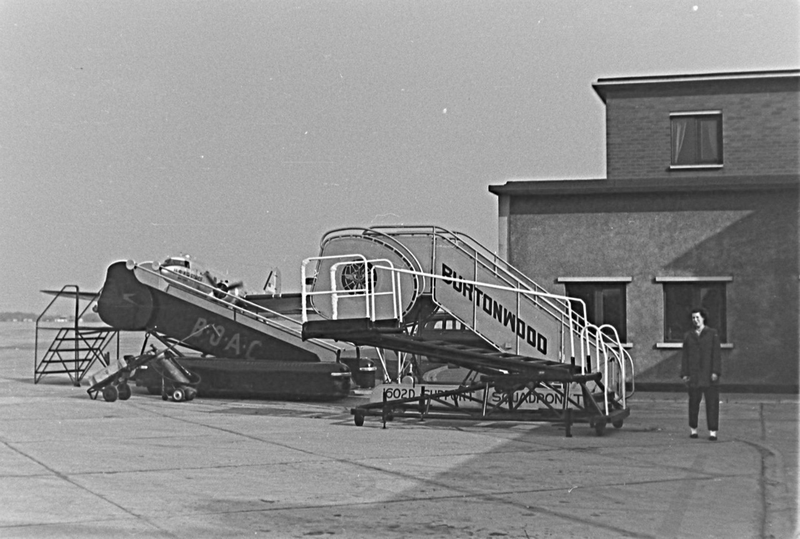
during May 1958.
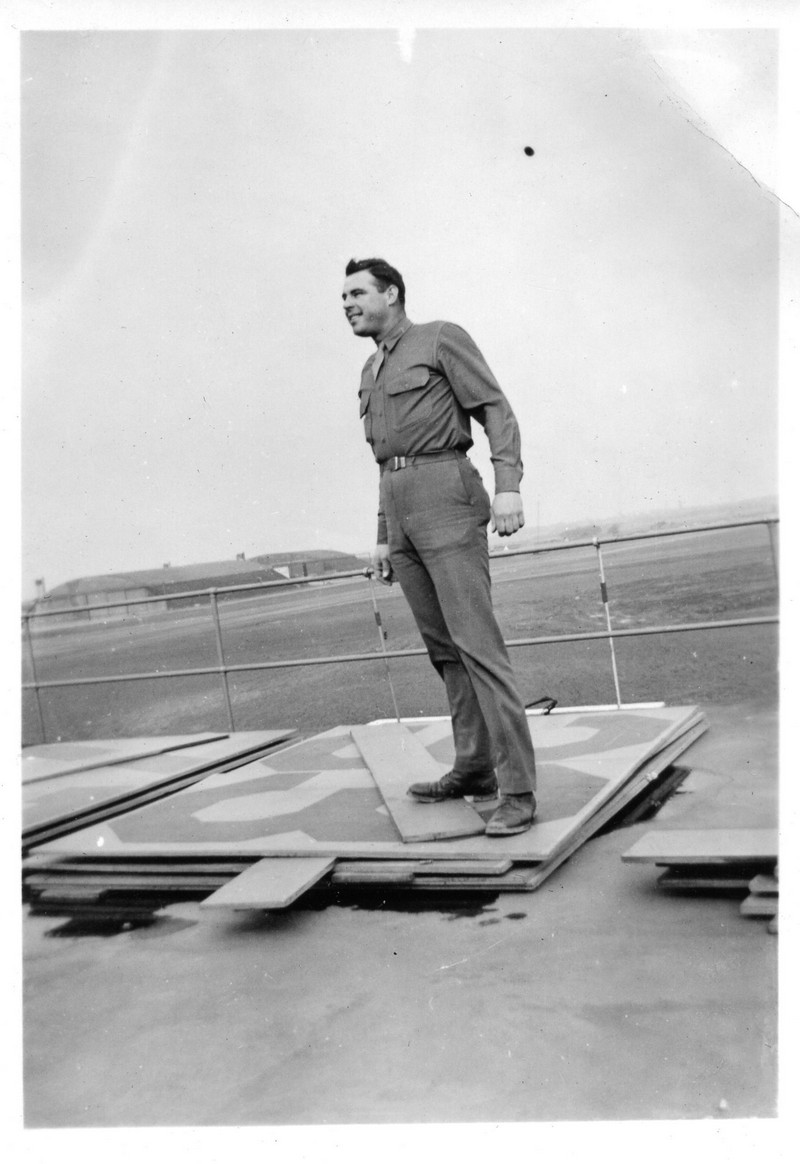
Burtonwood Flying Control March 1944 T/Sgt Hubert Christian from Mississippi on top of control tower Standing on the QDM Boards With the 2 'K' Type Hangars in the Background on 'A' Site. Photo From The American Air Museum in Britain - Ray Zimmerman Collection via Aldon Ferguson
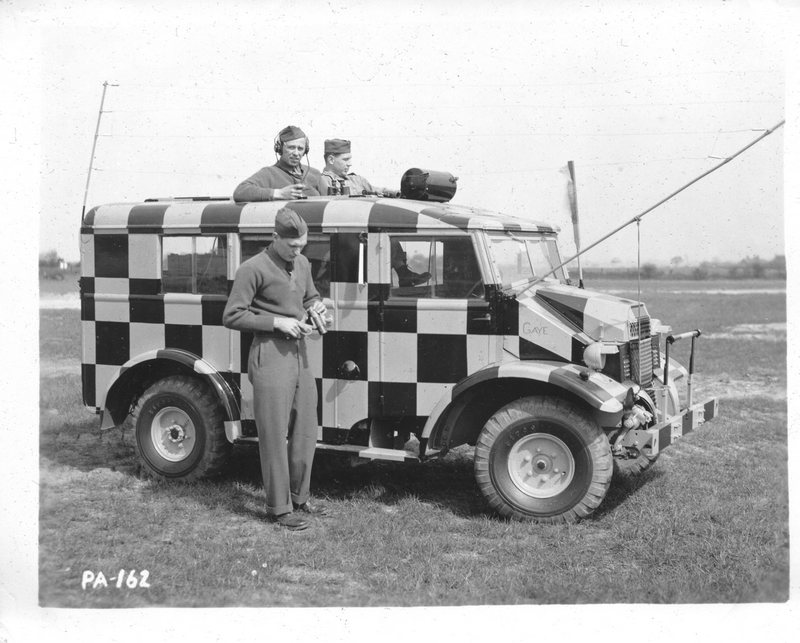
Burtonwood Flying Control Van - 20 April 1943 ...... Schnellinger & Ponezek, Ray Zimmerman outside. Note the signal lamp on the roof of the vehicle. Also note Zimmermanholding a signal pistol Photo From The American Air Museum in Britain - Ray Zimmerman Collection via Aldon Ferguson
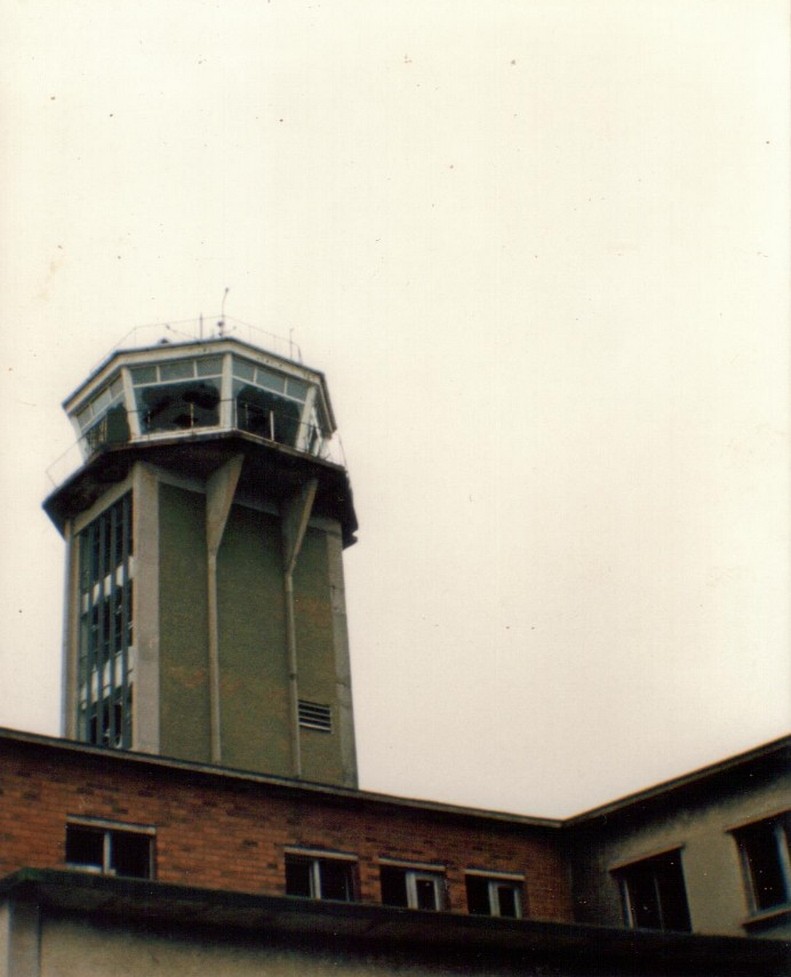
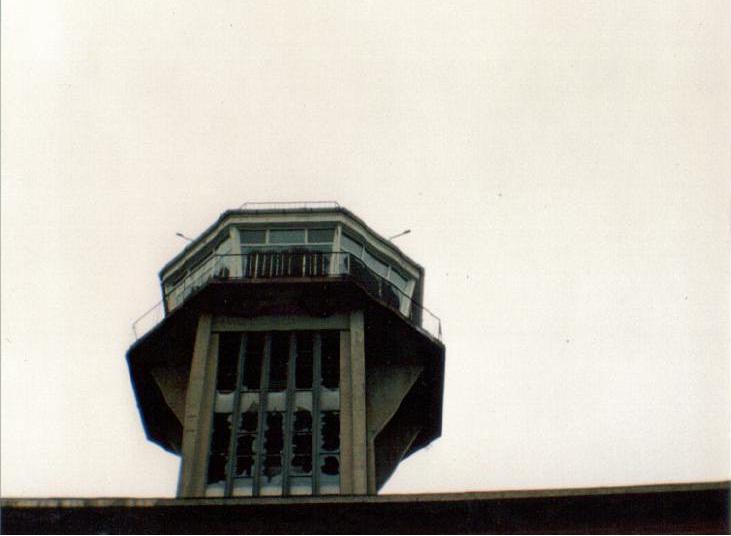
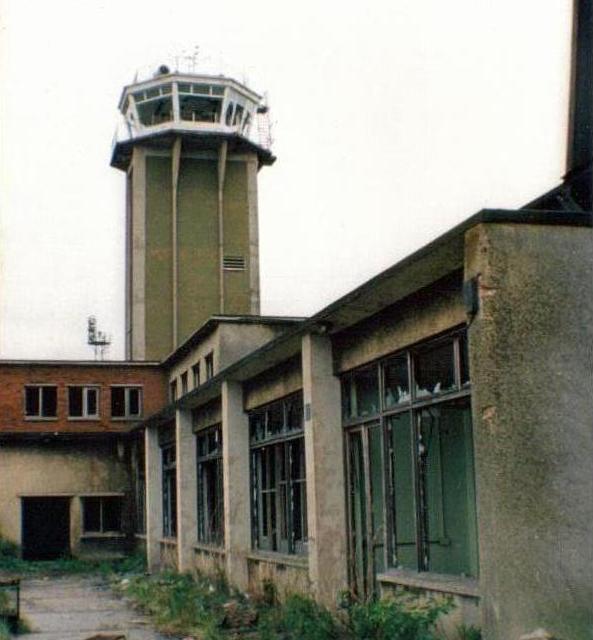
The new control tower, the 3rd to be built on the airfield was 80 feet high with an excellent view of both ends of the extended main runway & airfield. The new tower was air conditioned and had a met office, duty pilot's room and comm's room and was operated by the USAF 1965th AACC.
WW2 Control Tower across the motorway in the background can be seen the 2 'K' type hangars on 'A' site August 1987
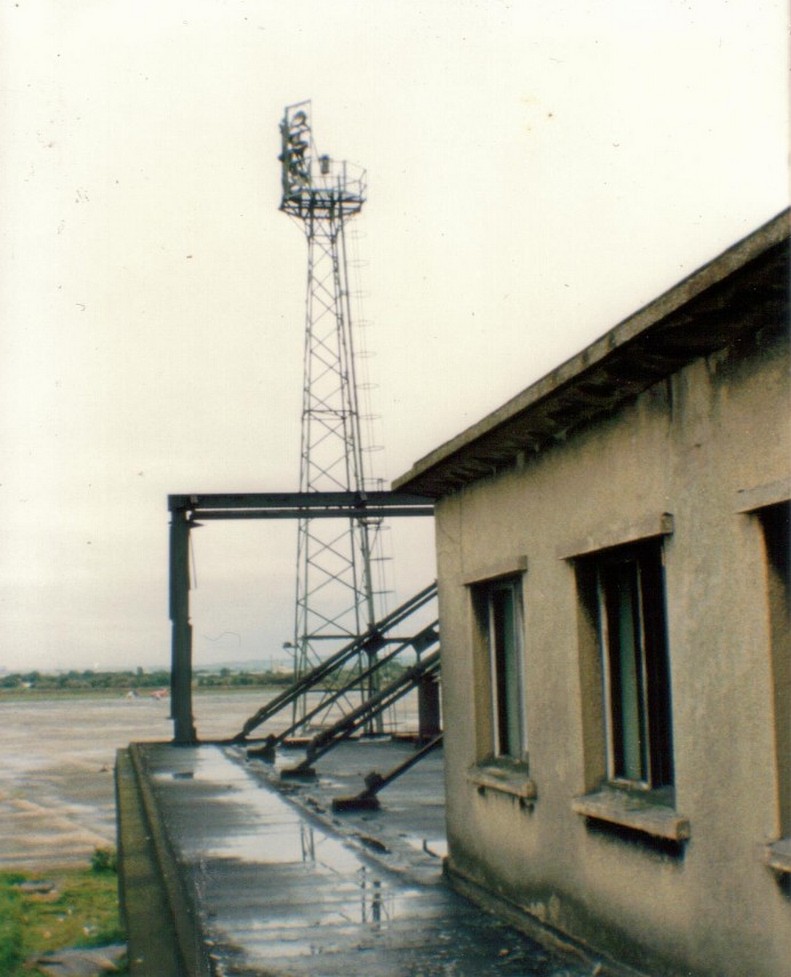
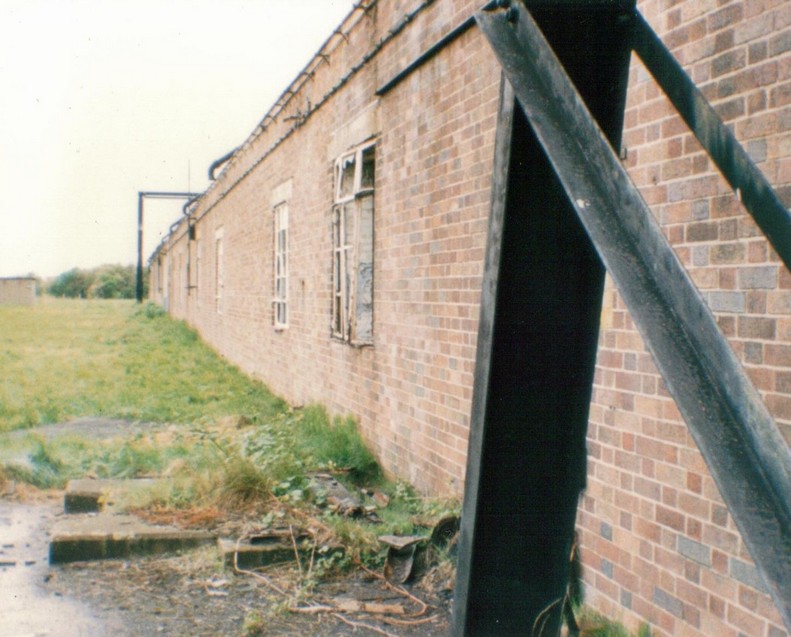
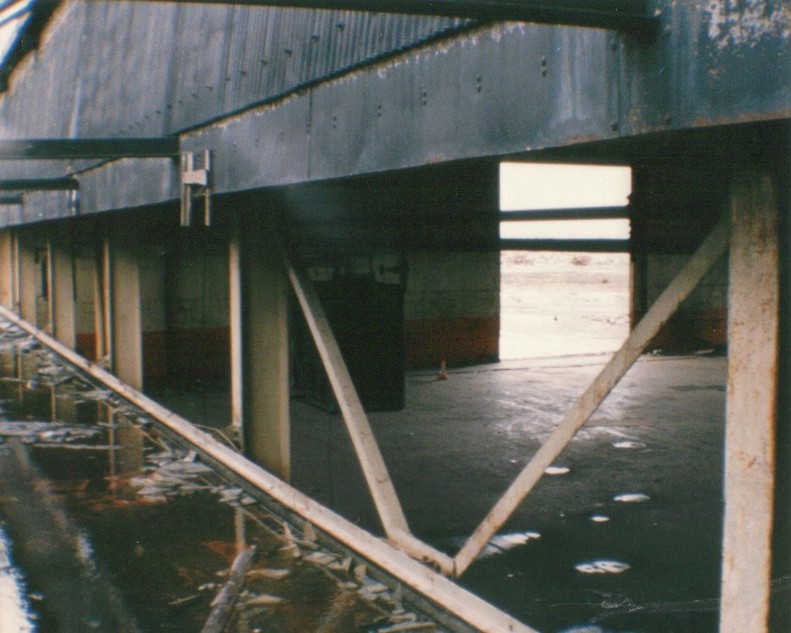
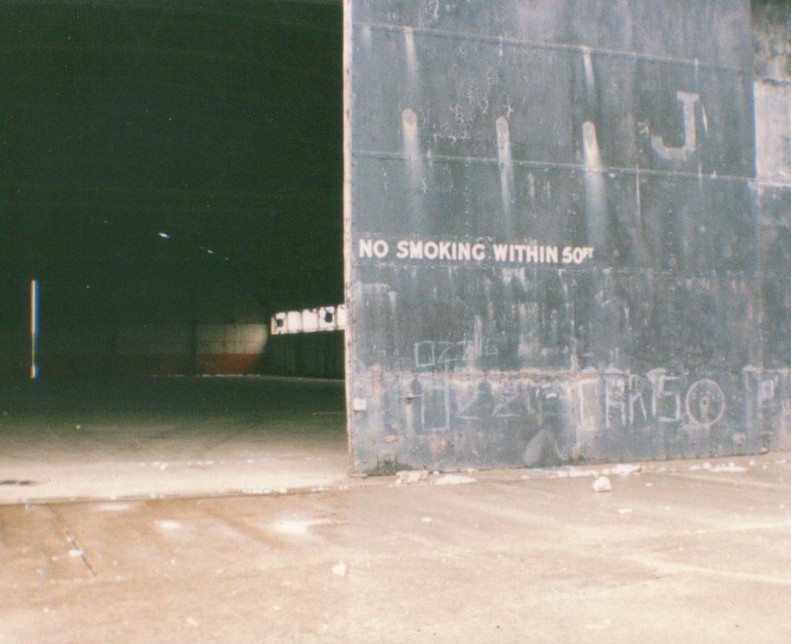
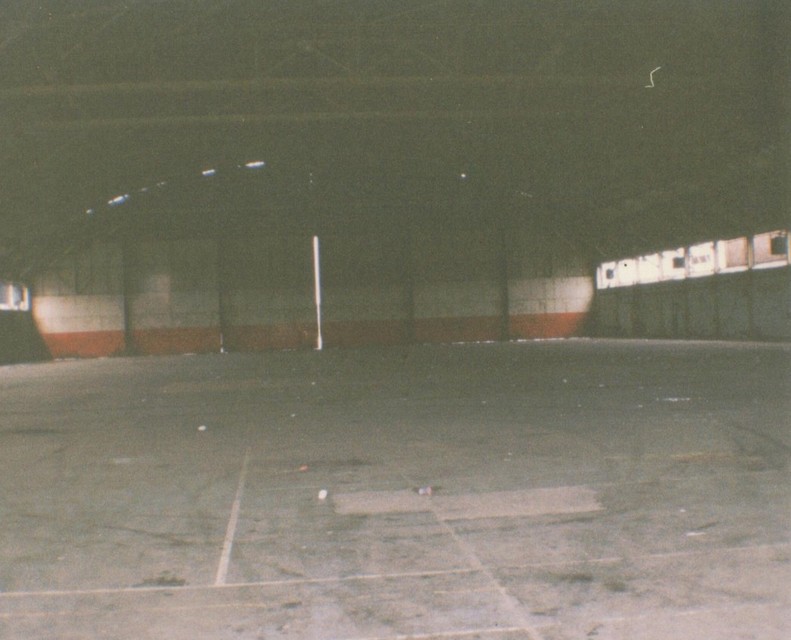
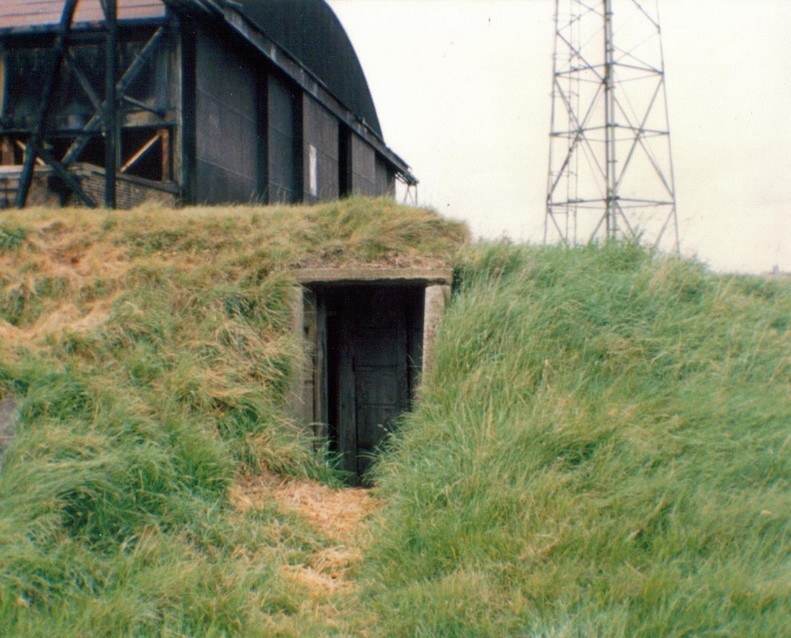
This type of shelter is usually built in an arch shape and the square shape is unique to Burtonwood. The same type was built on 'E' site and there may well have been others on the airfield. The only other example to be seen on a WW2 airfiled is at Kingscliffe airfield in Northamptonshire. They were manufactured by the Stanton iron works at Ikeston and were built of pre cast concrete segements.
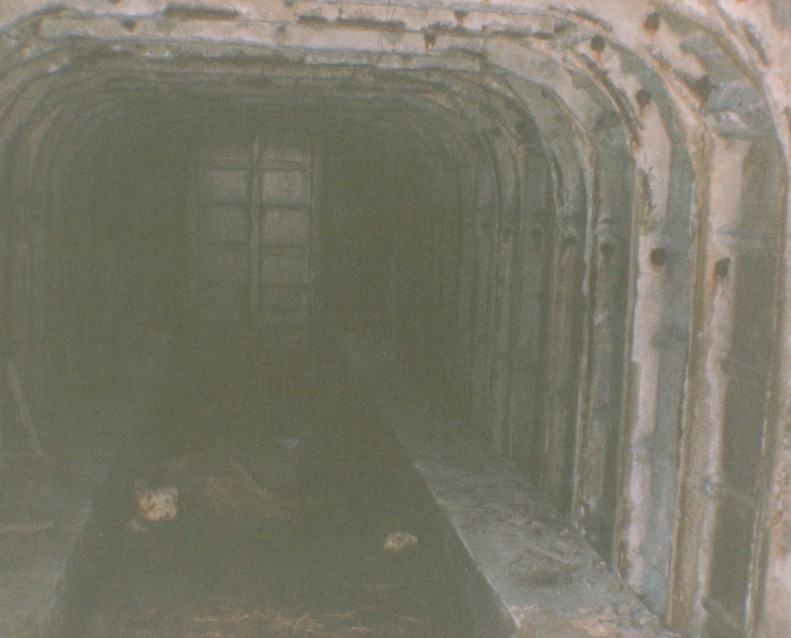
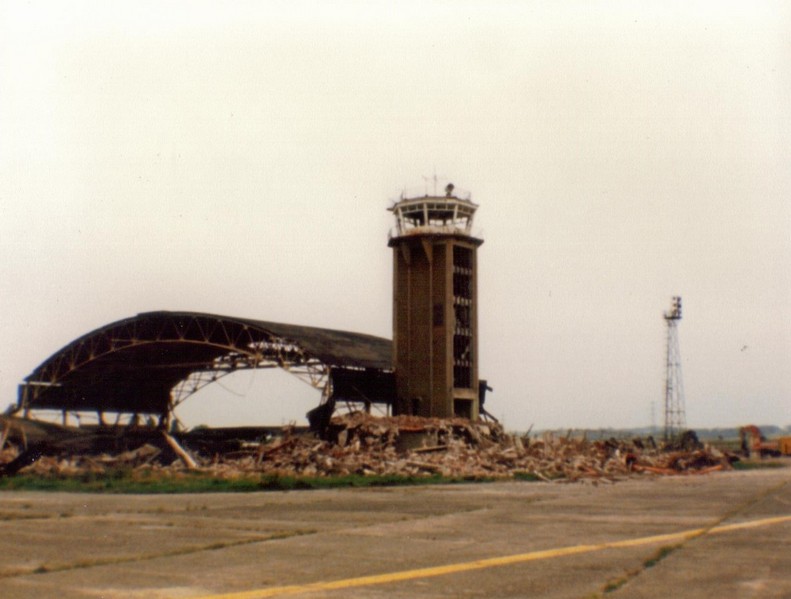
Apron off Mary Ann Site November 1987

display above the Technical Site
entrance into the Technical Site
Tech site was the main headquarters, administration, and stores and spares center. The photo was taken in October 1945. during the United States Army Air Force Occupation. Just inside the Technical site's main entrance is building 35
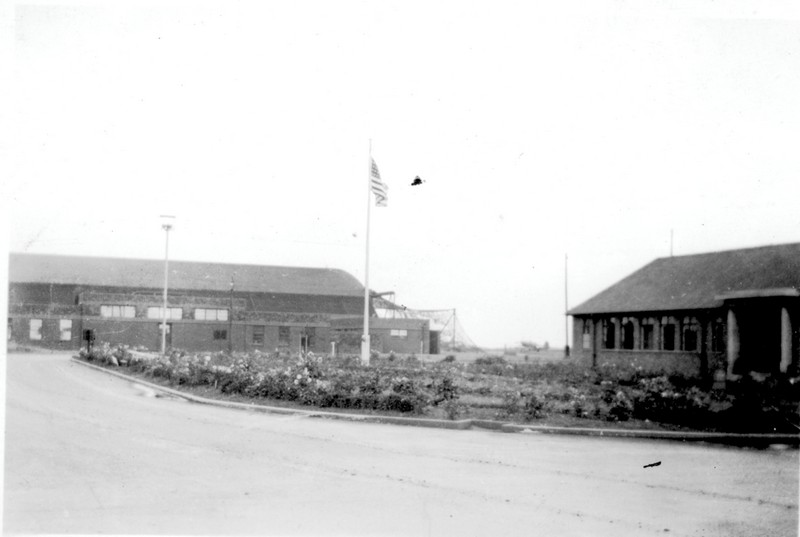
Building number 6 in the background is the J Type aircraft hangar and is constructed to Air Ministry Drawing 5836/39. The photo was taken in world war 2 during the United States Army Air Force Occupation. The open square with the flag poles at the Technical site, building 35
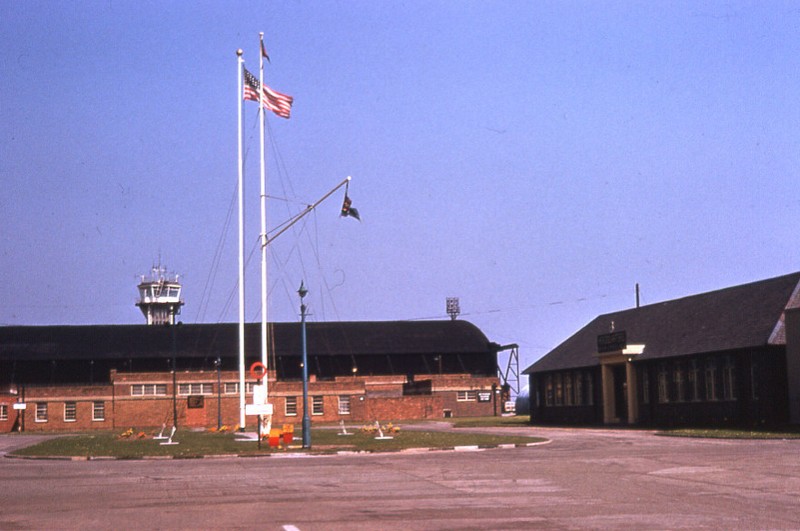
The photo was taken on the 23rd of April 1957, at this period of time being used by the Northern Air Material Area, United States Air Force. In the center of the photo is a pole mounted air raid sirenBuilding 6 is beyond it
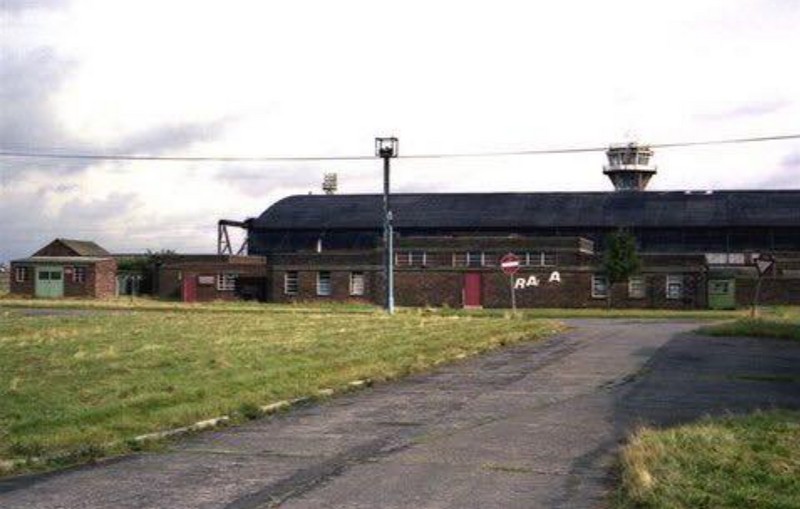
The buildings at the technical site were built to the expansion period design being constructed of permanent brick and slate roofing. With World War 2 already started this type of building design was abandoned, apart from site 6 and BRD site being constructed of temporary and permanent brick. The Communal living sites were constructed of a prefabricated design type. Building number 6 is the J-Type hangar doors that are on the left

in the background is building number 38 which is the side elevation of the Main Station Workshops, which is constructed to Air Ministry Drawing Number 6956/37. This photo is of the second World War 2 control tower to be built and is building number 2

The 2 K-Type hangars at A site can be seen in the background. The photo was taken from the new passenger terminal. A winter scene at Burtonwood

This was the 2nd control tower to be constructed at Burtonwood the first control tower was a fort type at Mary Ann site that was built at the wrong location on the airfield as building work progressed the fort type control tower became obscured of the main runway. The world war 2 Control Tower/Watch Office
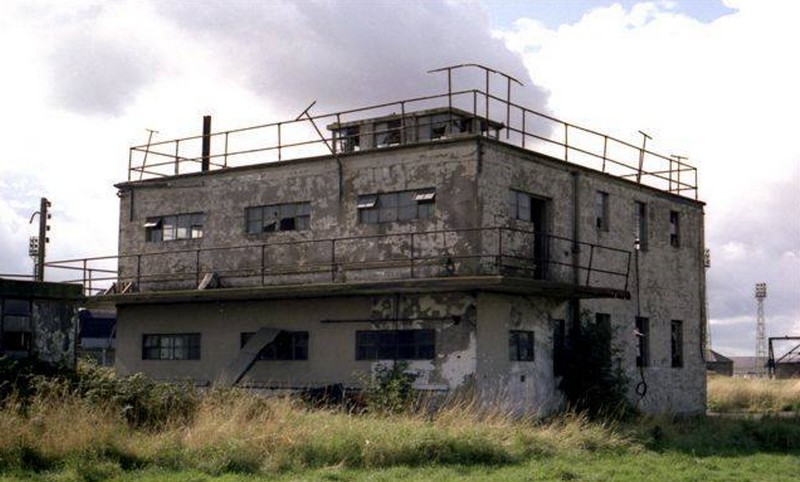
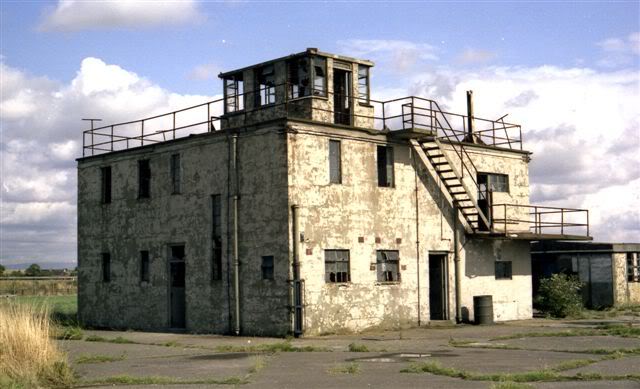
The control tower built at Burtonwood is designed for the air ministry's directorate of works and buildings, as a watch office for all commands designed to air ministry drawing number 12779/41.and with small windows to AM Drawing number 15371/41 The two-story building is constructed with permanent brick with a sand and cement rendered finish, and the roof is waterproofed with ash felt. The front elevation of the building is 34ft 6 ins and the side elevations are 36 ft 9 ins. The first-floor exit door leads out to the concrete balcony and onto a steel staircase gaining access to the roof. The balcony and roof are fitted with tubular steel railings supported by iron columns. The ground floor has access to the first floor by an internal flight of concrete stairs. North West facing View of hangar 'J' August 1987
Note Hangar 'K' just visible in the background on the left.
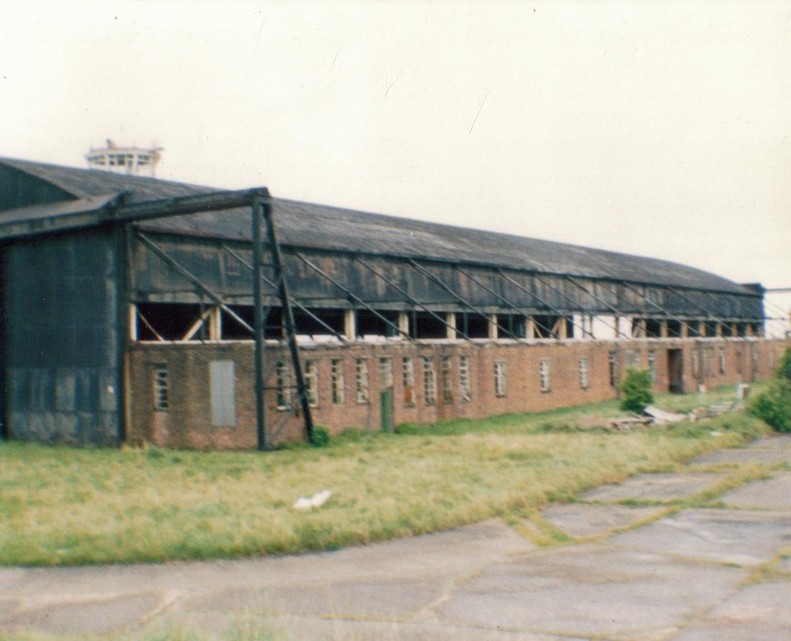
This was constructed in front of hangar 'J' annex.
(Note: The vent you can see is the air conditioning condenser outlet)
Tower on 1 of the Landing's August 1987
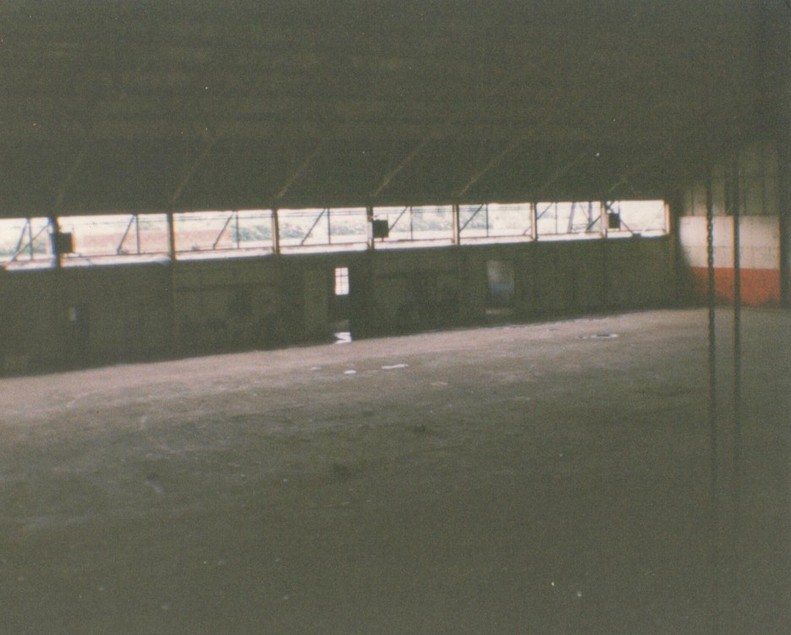
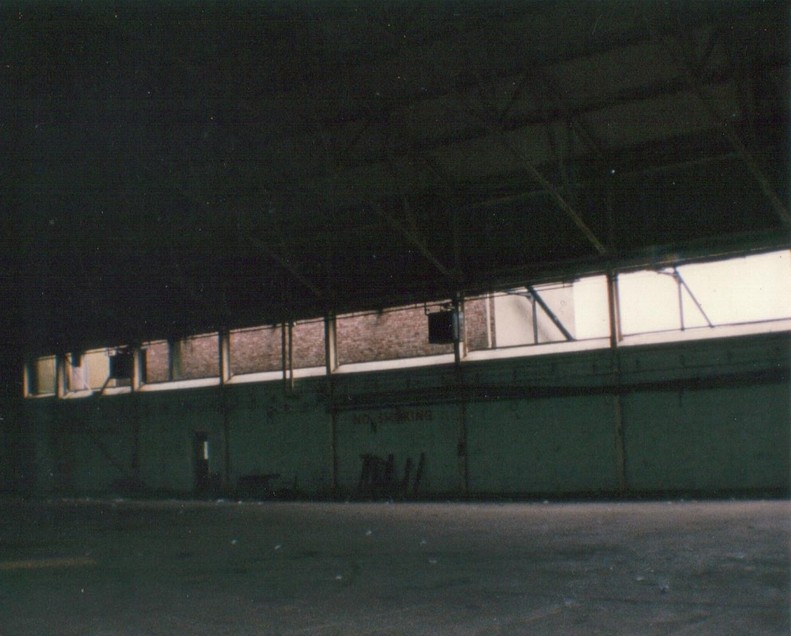
(Note: Through the windows you can see the new passenger terminal)
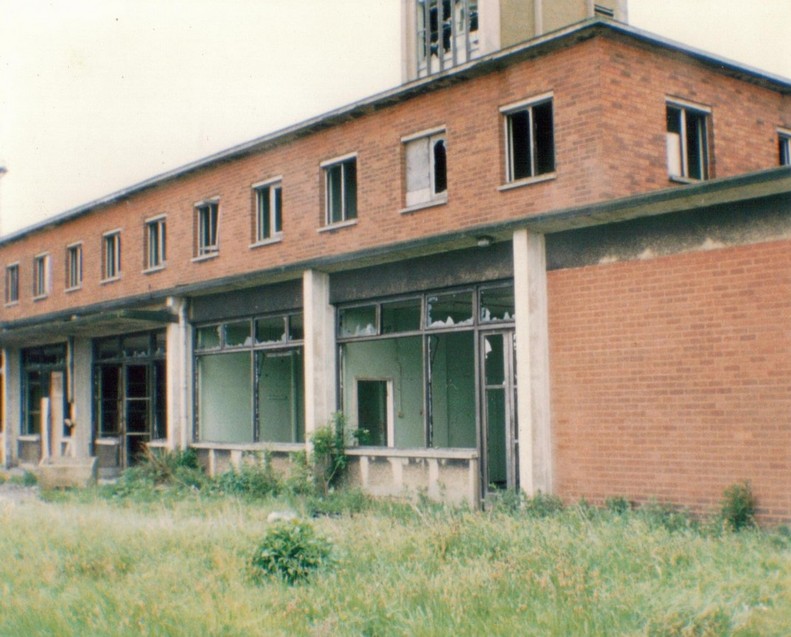
The new passenger terminal was disused when the USAF left technical site. Then the US Army arrived and part of it was then used by them as their NCO club in the early 1970's.
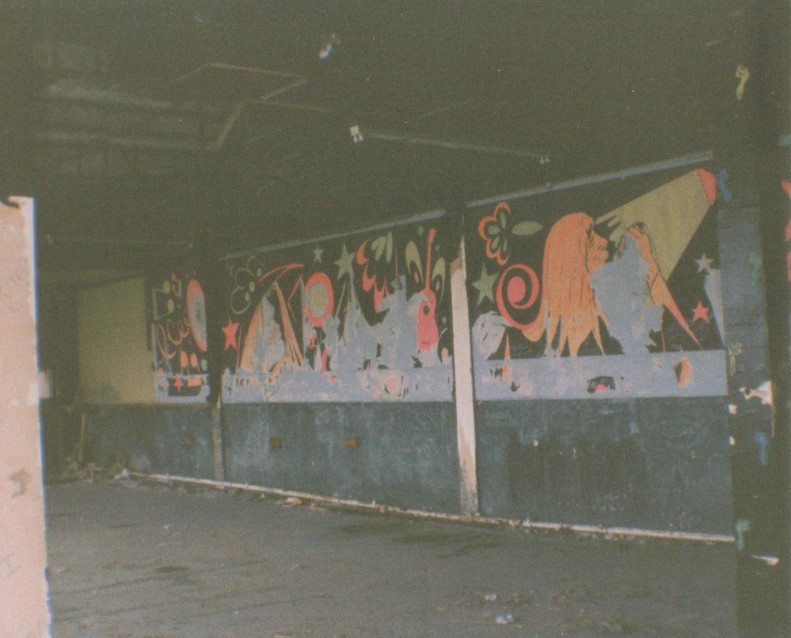
(Note: The pillars that you can see on the left are supporting the side annex concrete flat roof)
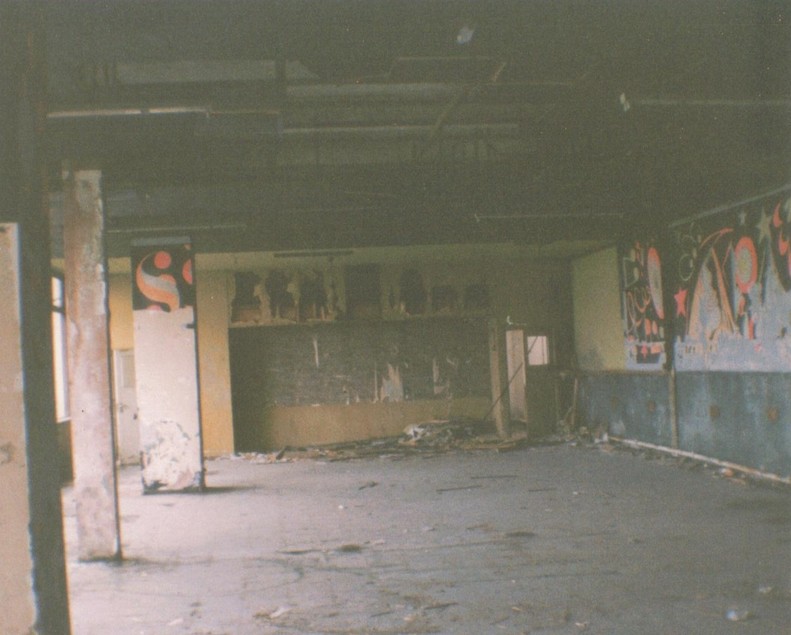
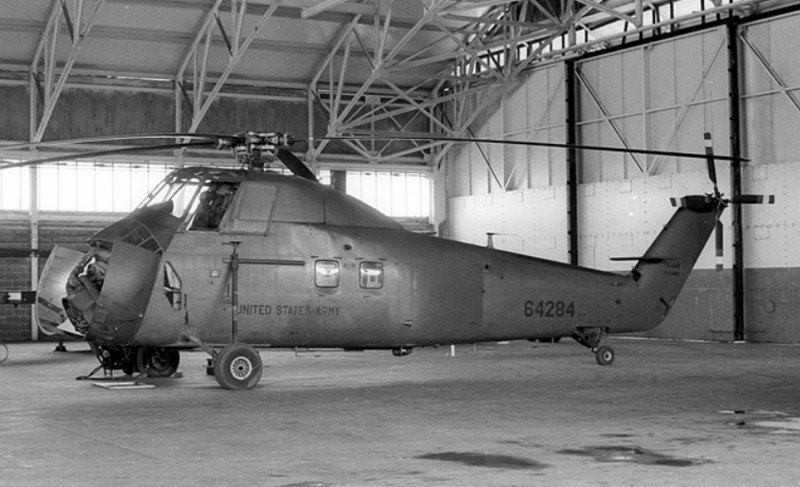
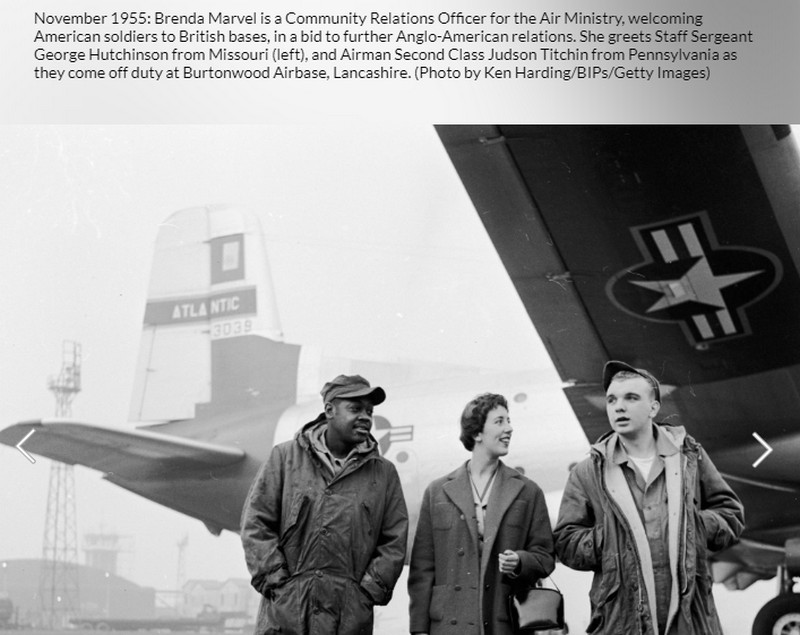
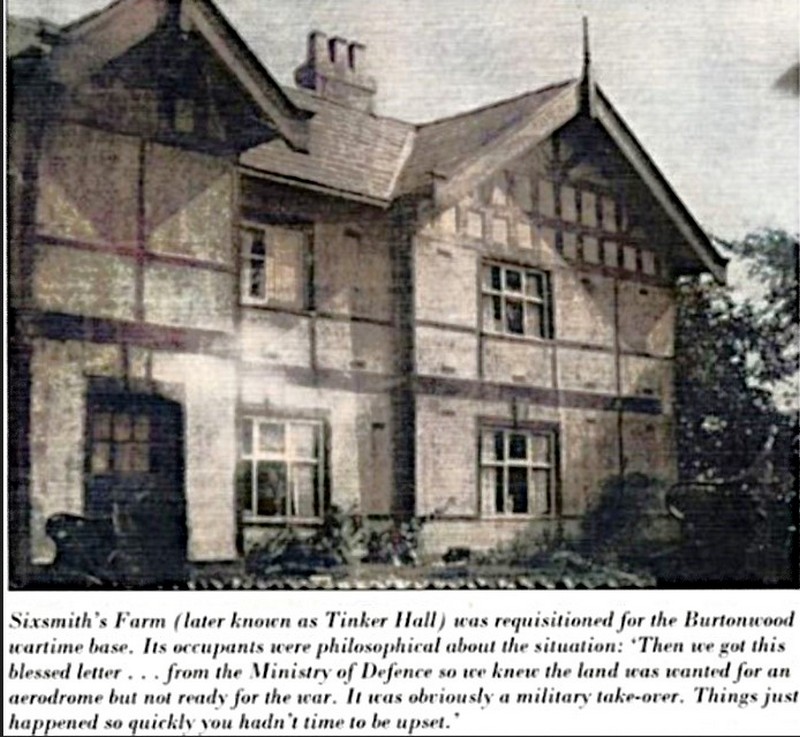
In January 1953 the USAF started major building work on Tech Site by demolishing part of the North Annex of hangar 'J' to make way for a new control tower and passenger terminal. Sir Alfred McAlpine Company LTD won the £750,000 contract for this work. Also at this time the main runway 09/27 was extended to 9,000 feet long and 250 feet wide at a cost of £1,500,000. The new passenger terminal was built for the huge increase of freight and arrivals and departure of US Military Personnel and their families flying in and out of Burtonwood to the Unite States. British Overseas Airways Corporation used the terminal in 1955 operating 6 flights per week using Stratocruisers flying to New York. The terminal building housed a bank, customs, American Express, cafeteria, shop, lounge, check-in and offices for support staff. The terminal building handled 260,000 passengers and air-lifted £72,000,000 of freight each year. The terminal building became known as 'The Gateway To Europe' In April 1959 the USAF left and all flying activity ceased. Tech Site was handed back to the RAF but was not extensively used. The American's returned again, this time the US Army, in February 1967. They took over 'site 8' called 'The Header House'. The US Army had no use for 'Technical Site' but used the hangars to store their helicopters in their for a while. They also used part of the disused passenger terminal as their NCO club for a while. The last fixed wing aircraft to use 'Technical Site' were the glider's of 635 Air Training Corp's gliding school. The gliding school moved out in 1983 when 'Tech Site' was finally demolished.
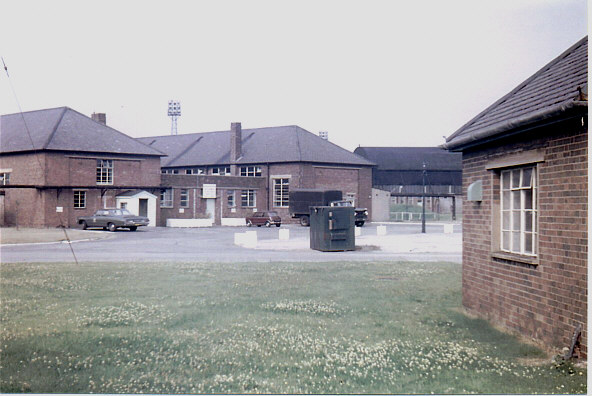
Building 6 is the 'J' type hangar (in black). Building 36 is the corner building on the right of the photo and was the HQ buildings. View From The Control Tower
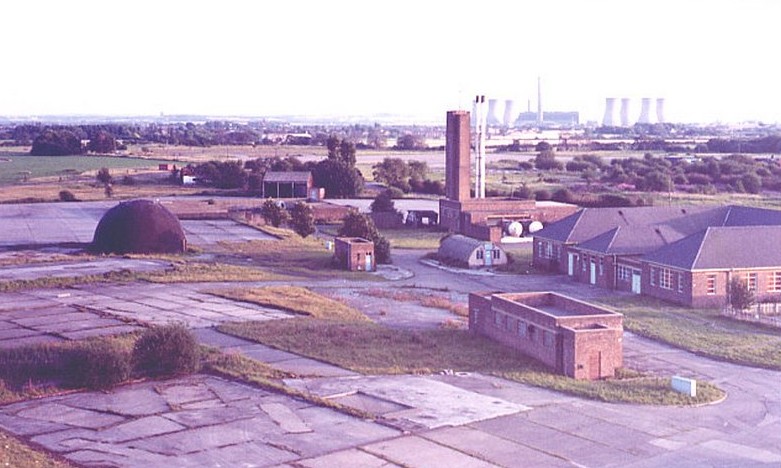
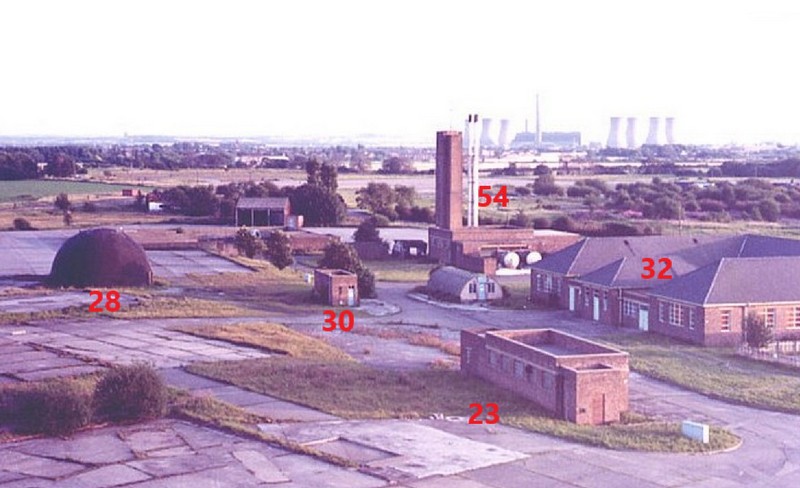
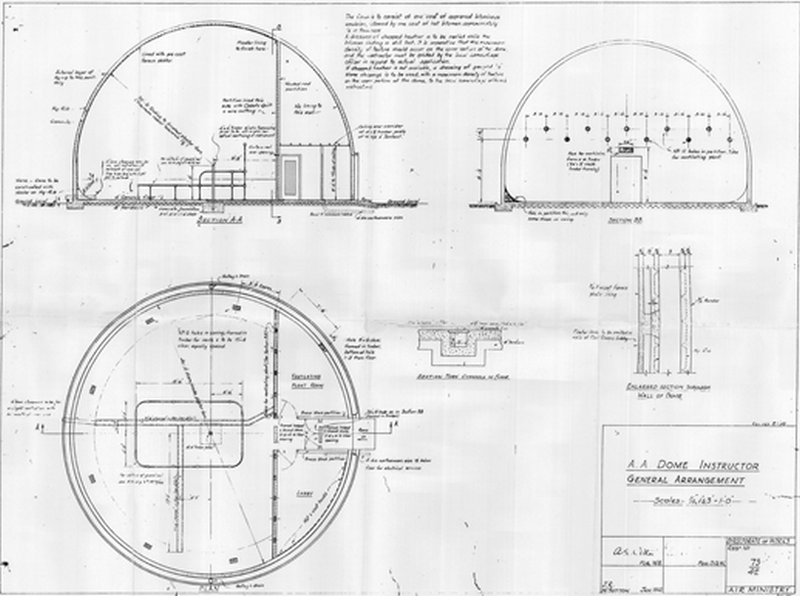
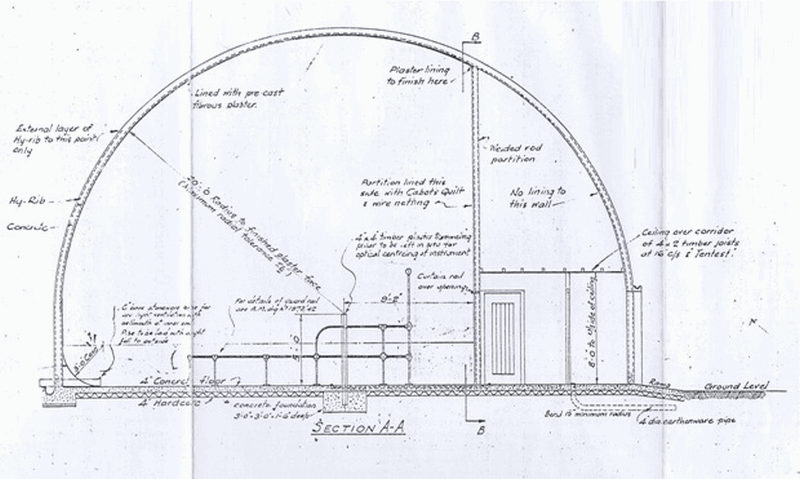
(photo above & photo below) and was the gunnery trainer.The synthetic gunnery training dome was developed by the naval officer Henry Stephens and was constructed of reinforced concrete and was 25 feet tall and 40 feet wide. Stephens worked with Kodak to develop a cinematographic apparatus which projected the stop-frame films onto the interior walls of the dome. The gunners undergoing training were supplied with a small projector which shone a spot of light at the exact point where the operators were firing. this gave the instructor some idea of the estimation of the trainee's accuracy. as the gunners pulled the trigger the soundtrack played the noise of a firing shot- with a duration of approximately five seconds - is the time it took to empty the cartridge of ammunition. the gunners wore yellow filter goggles so only the instructors could see the flash of light. 43 of this type of Synthetic gunnery training domes were constructed in the country and only 6 survive today. This is building number 28 and is the synthetic gunnery training dome during the year 1983 on tech siteconstructed of reinforced concrete and built to air ministry drawing number 73/42. This example at Burtonwood has been demolished.
In this period being used by USAAF Northern Air Material Area.
Apron in Front of the New Passenger Terminal.
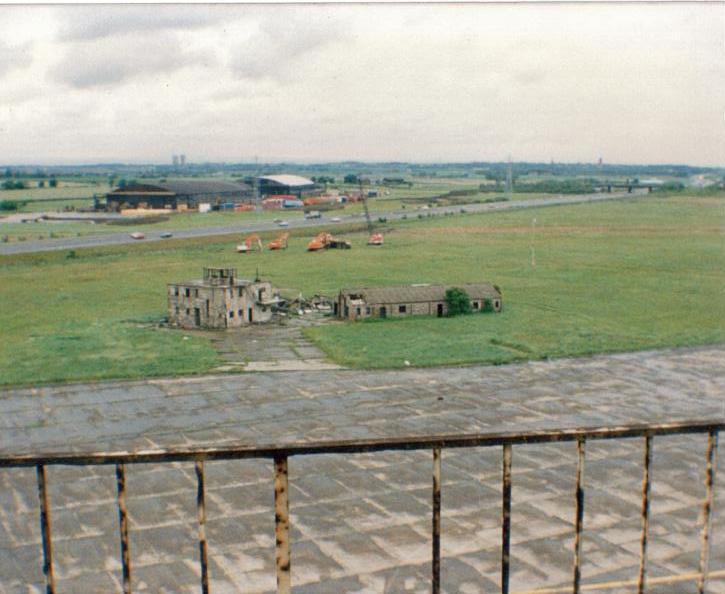
Tower & Site 'A' in The Background August 1987. Building 2 is the WW2 Control Tower. Building 3 is the Ancillary to the Control Tower.
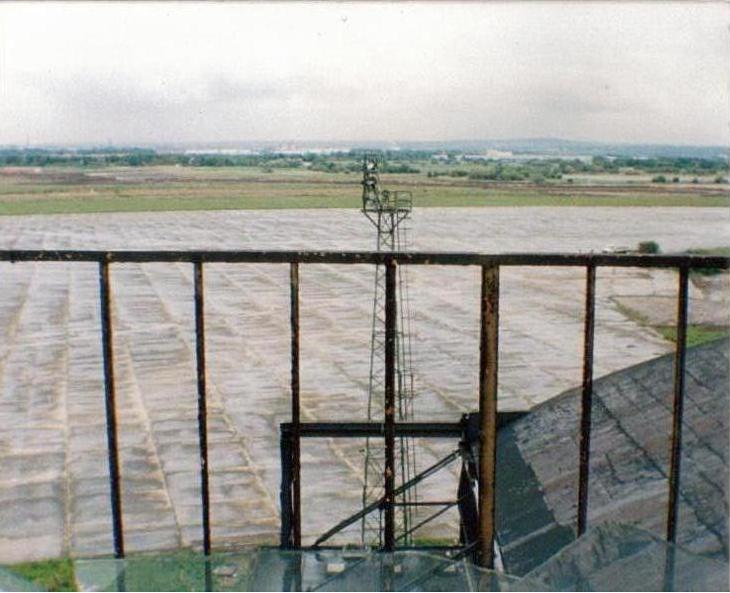
Hanger 'K' in The Background Looking West August 1987.
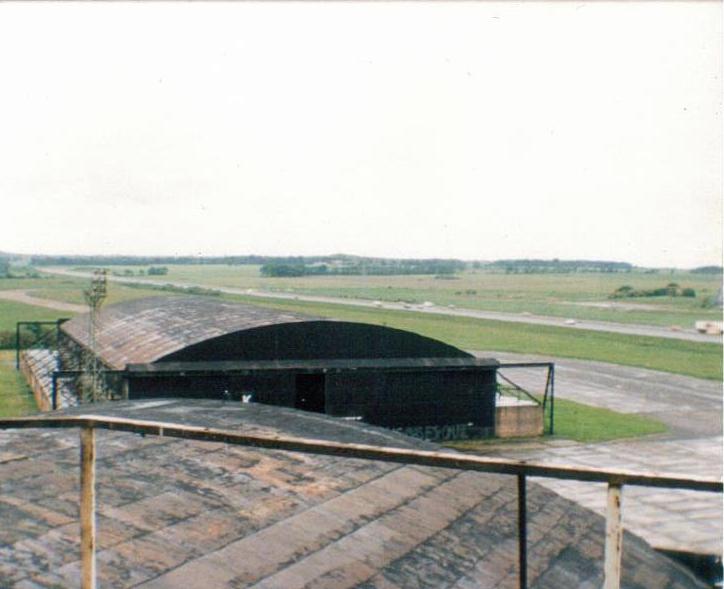
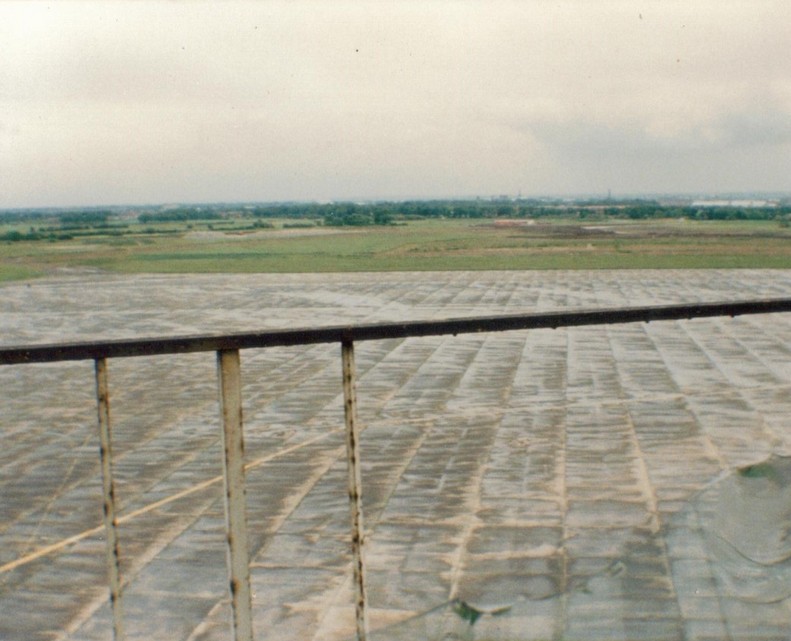
The M62 Running Along Where The Main Runway 09/27 Used To Run August 1987
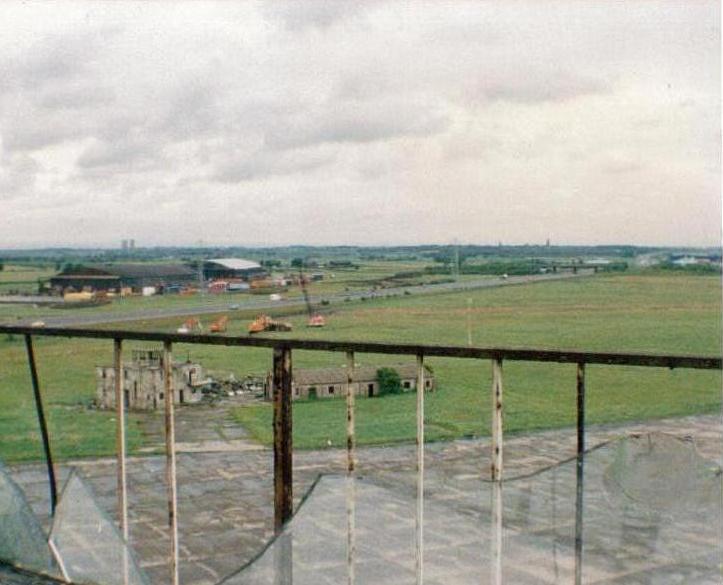
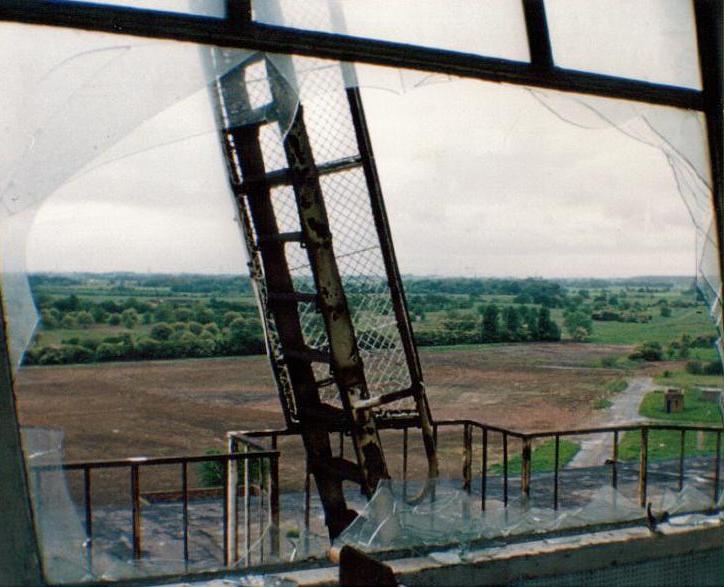
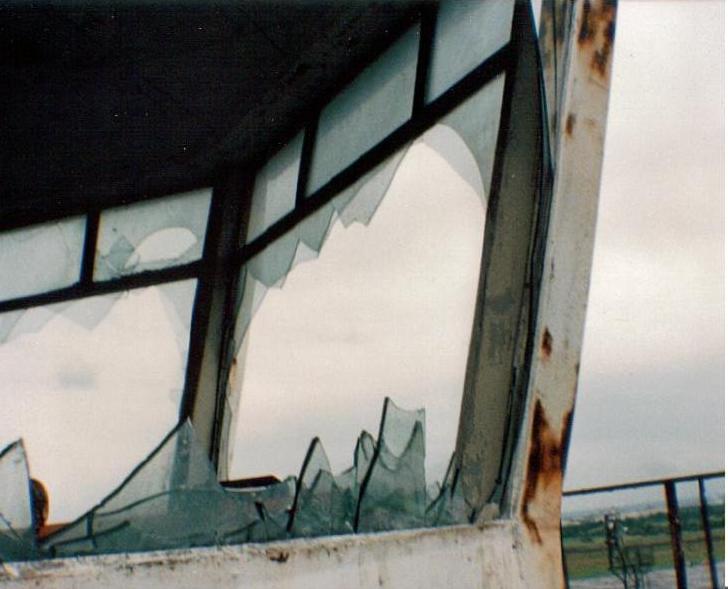
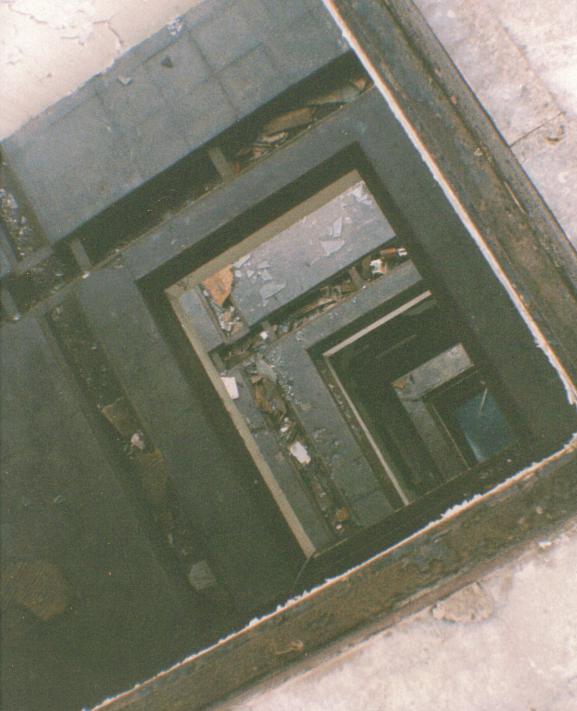
A Service Shaft With its Concrete Covers Removed in The New Tower Looking Up From The Bottom (Each Square is Floor). Access To Each Floor Was By Steel Ladder August 1987
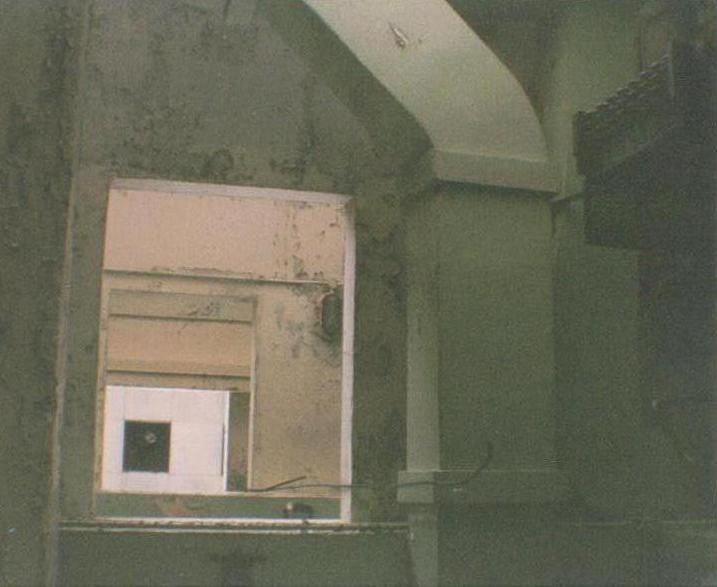
A Service Shaft With its Concrete Covers Removed in The New Tower Looking Down From The Top (Each Square is Floor). Access To Each Floor Was By Steel Ladder August 1987
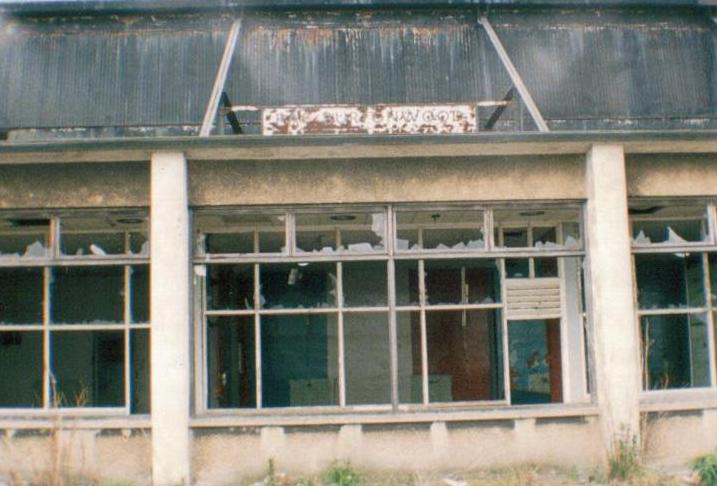
The Sign In The Middle Has: 'RAF Burtonwood'Written On it.
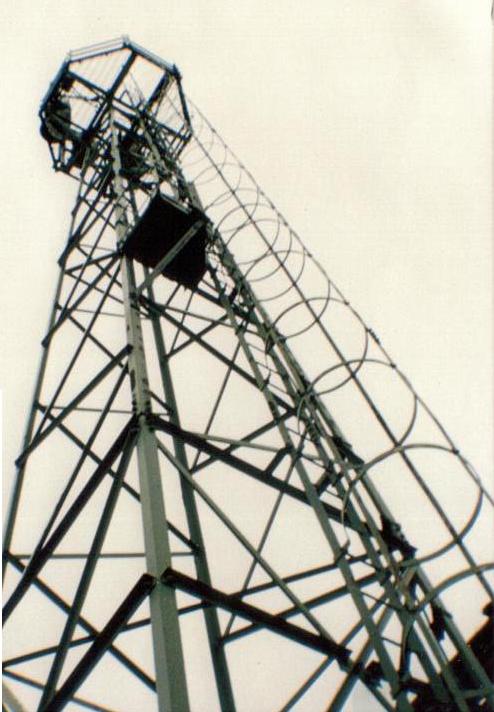
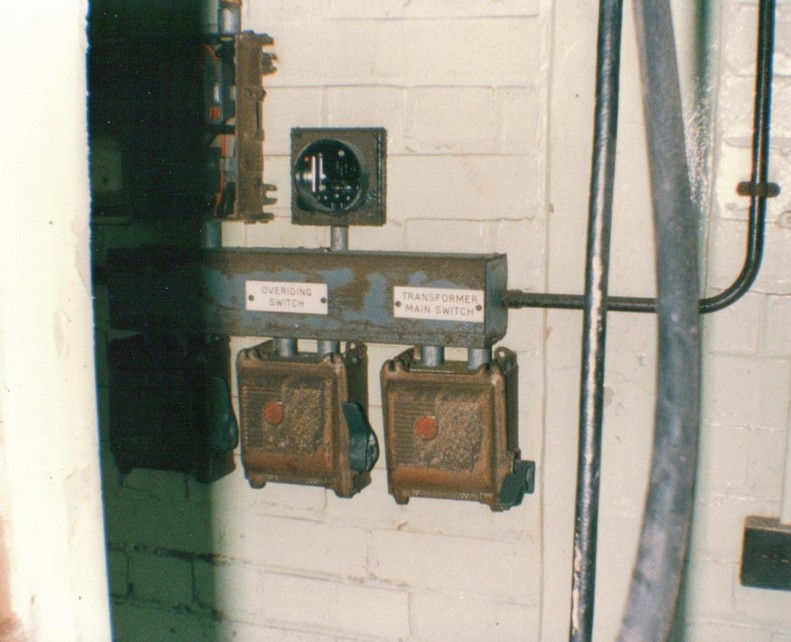
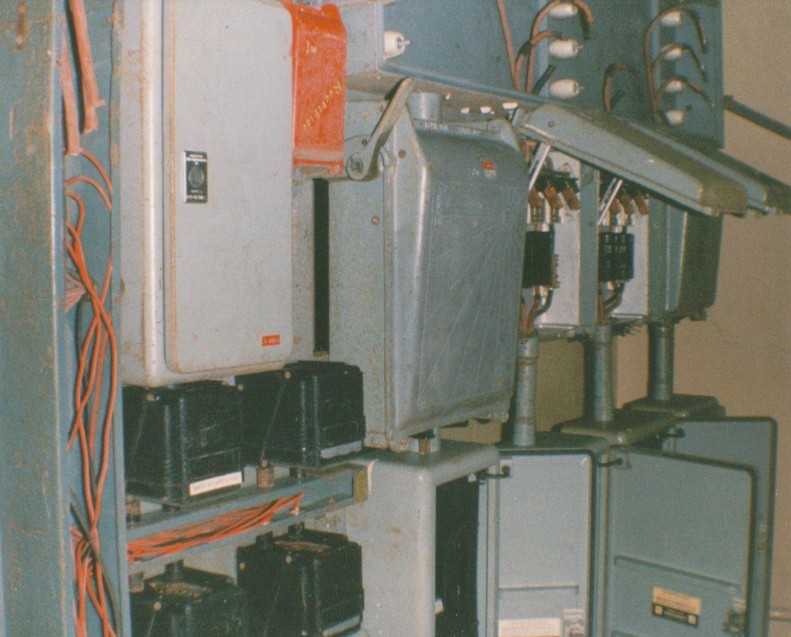
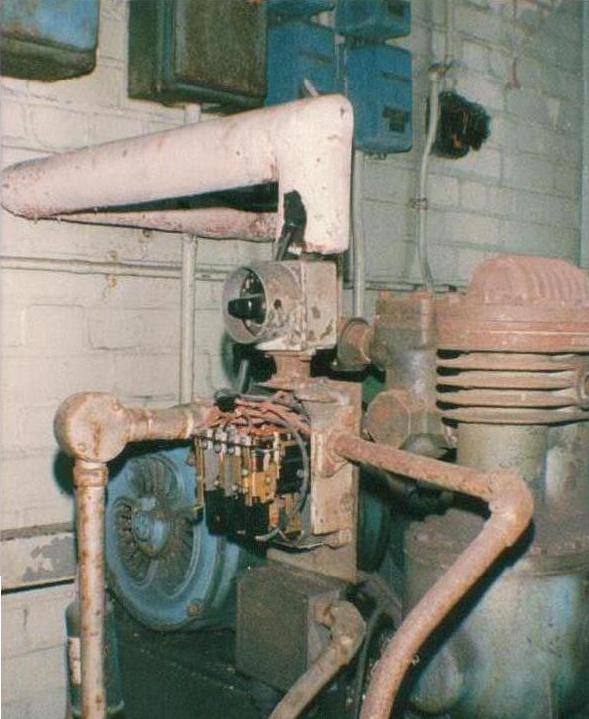
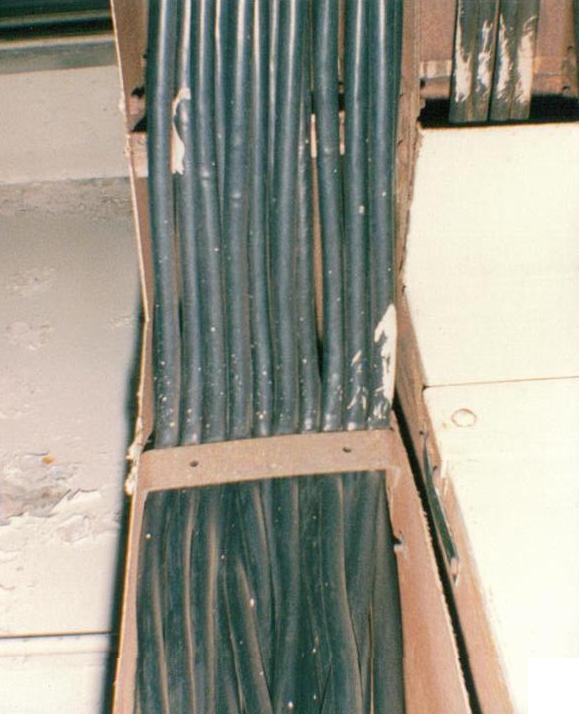
This gave access to the control room at the top of the tower. The landings also housed electrical and air conditioning equipment.
height glazing for natural light onto all the landings.
on technical site in April 1988 by Fred Dibnah.
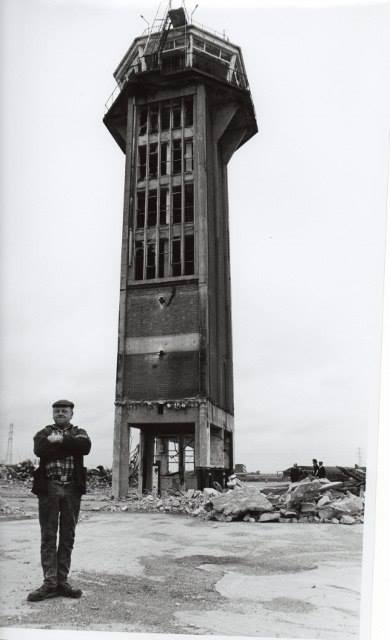
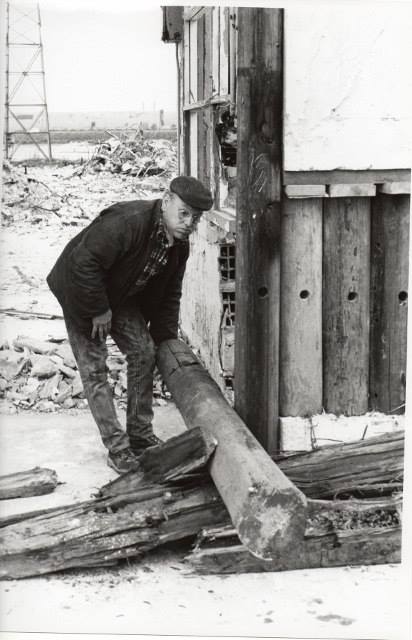
long term member of the RAF Burtonwood association. Pete sadly passed away in 2007.
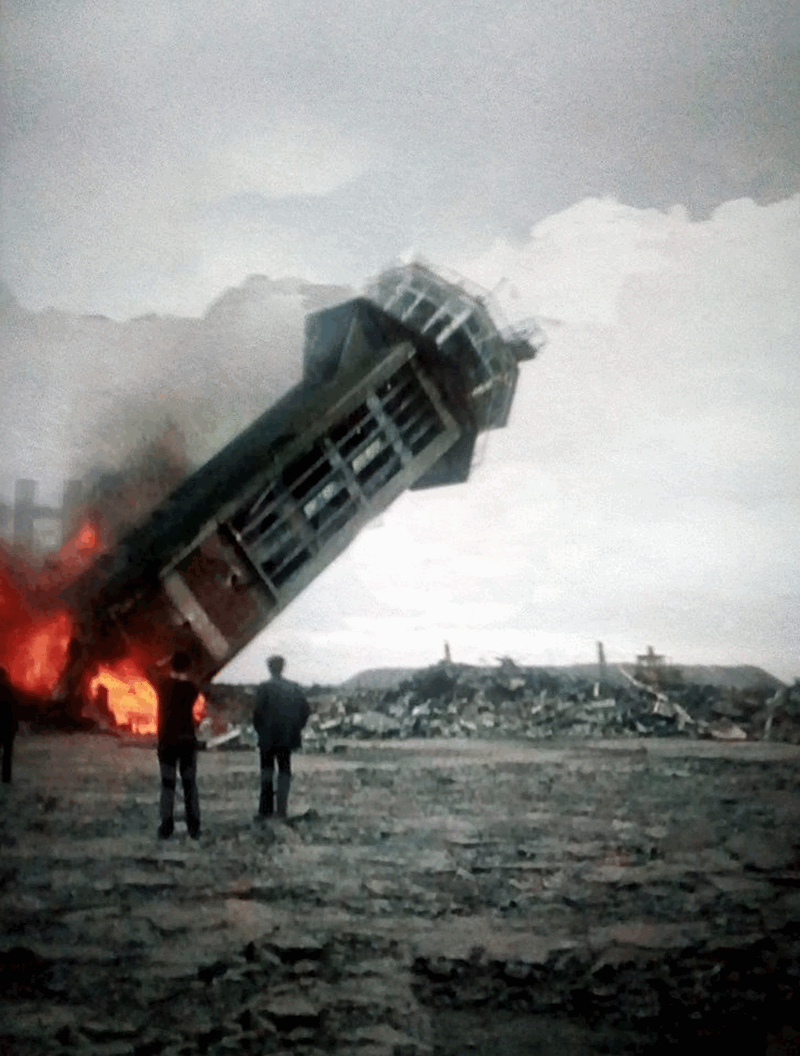
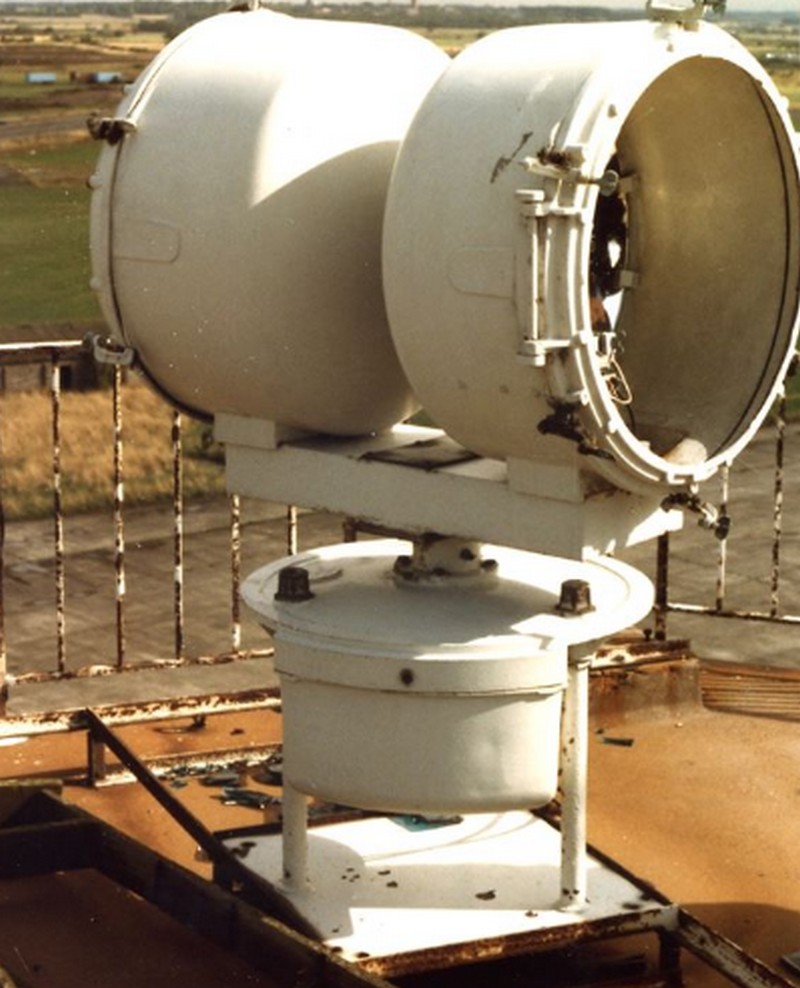
(in white) on top of the roof.
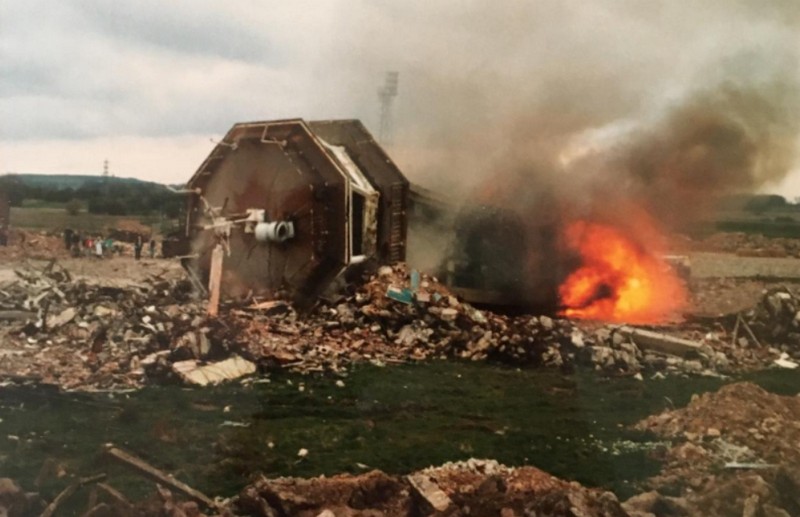
the roof of the control tower BEFORE Demolition
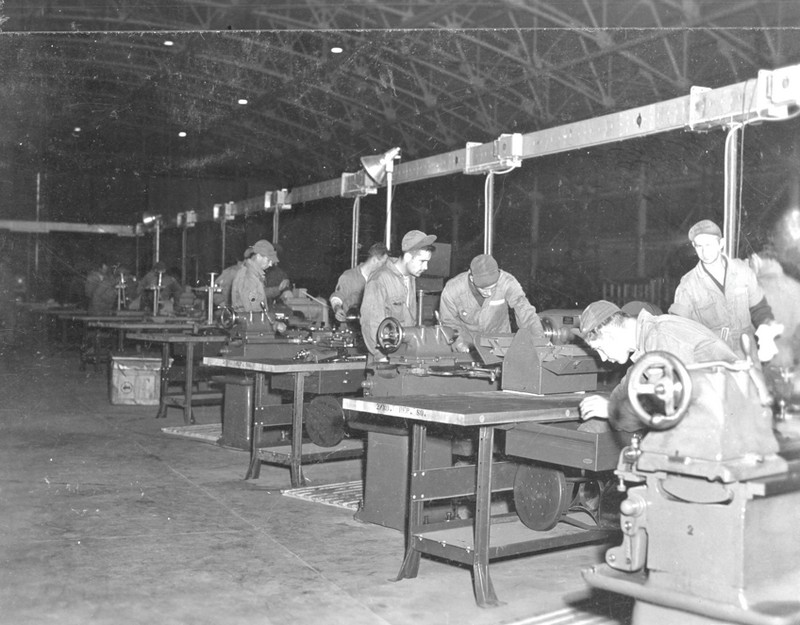
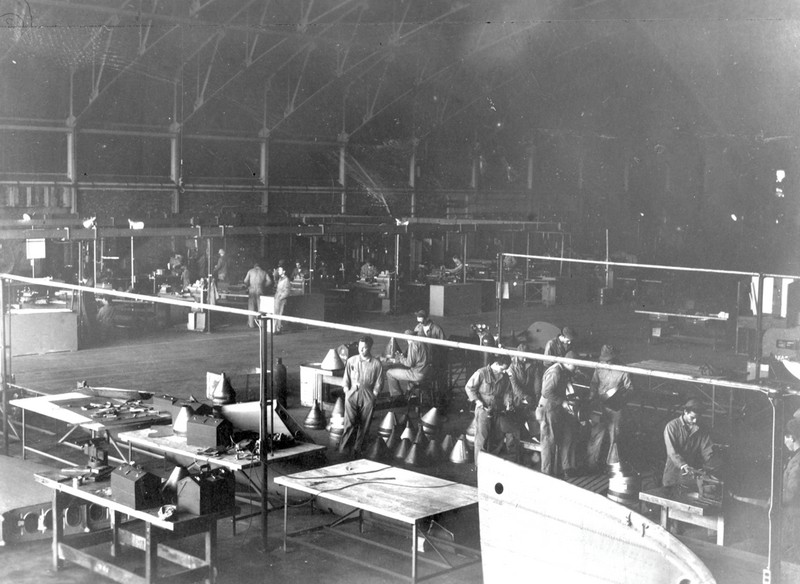
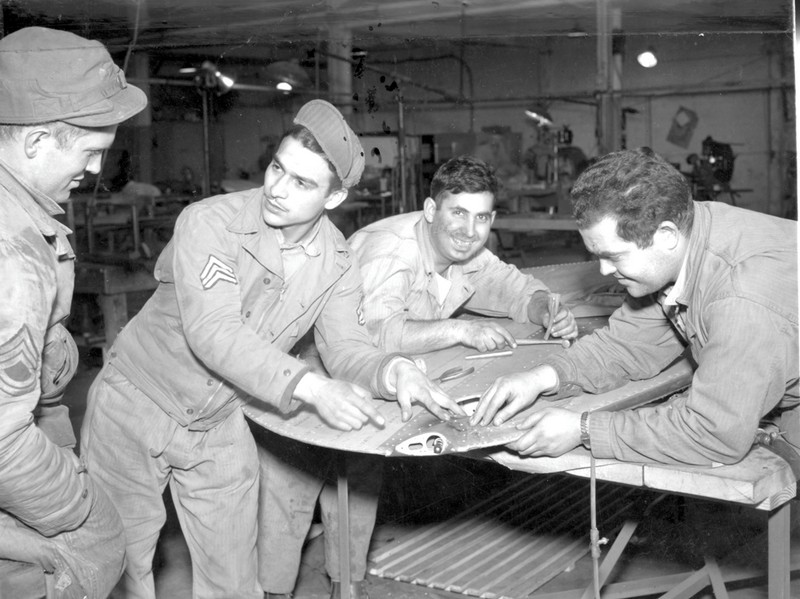
Technical site newly arrived American service members of the 2nd repair squadron air depot group working inside one of the K or J type hangars at the technical site that has been converted into a machine and sheet metal workshop. Apart from the Burtonwood repair depot no workshops or warehousing had been constructed on the airfield site in 1942 during world war 2. The 2nd repair squadron air depot group in their first workshop during world war 2
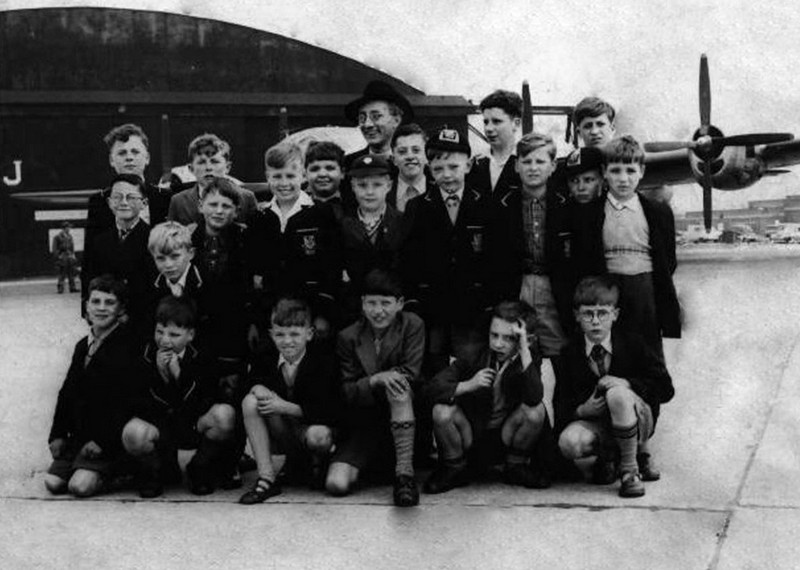
Church choir of St Sebastians The photo was taken in front of the J-type hangar at the Technical site in 1957. Photo from Pete Martin.
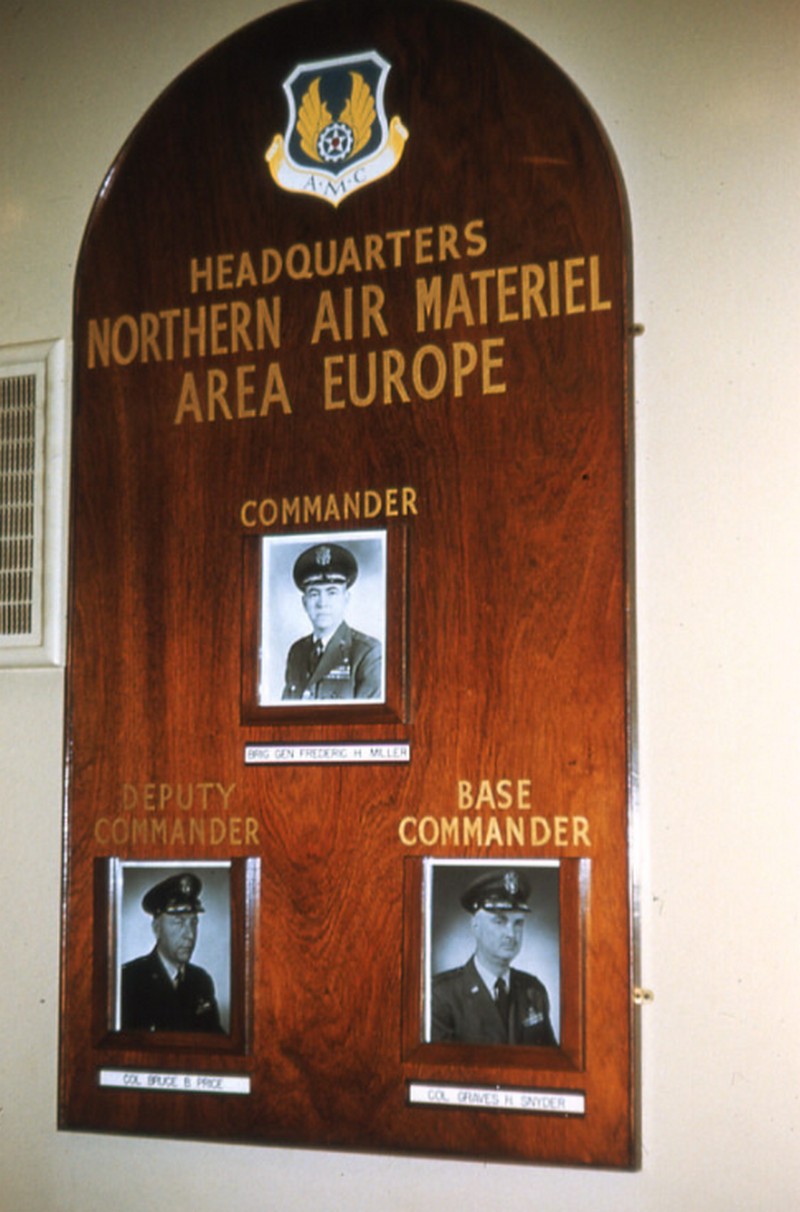
Materiel Area Europe Plaque Located inside of the passenger terminal. The photo was taken on 29 September 1957.
Mast Wind Sock.

terminal during the 1950s. The photo was taken from the roof of the world war 2 control tower Photo credit by Steven Hall.
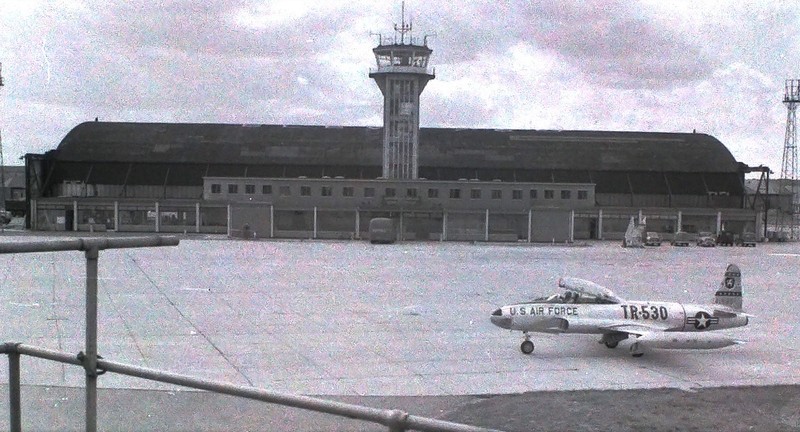
apron with the world war 2 control tower in the background on the 20 May 1967. Photo credit by Paul Tomlin.